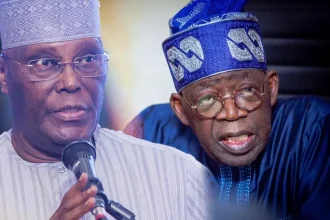
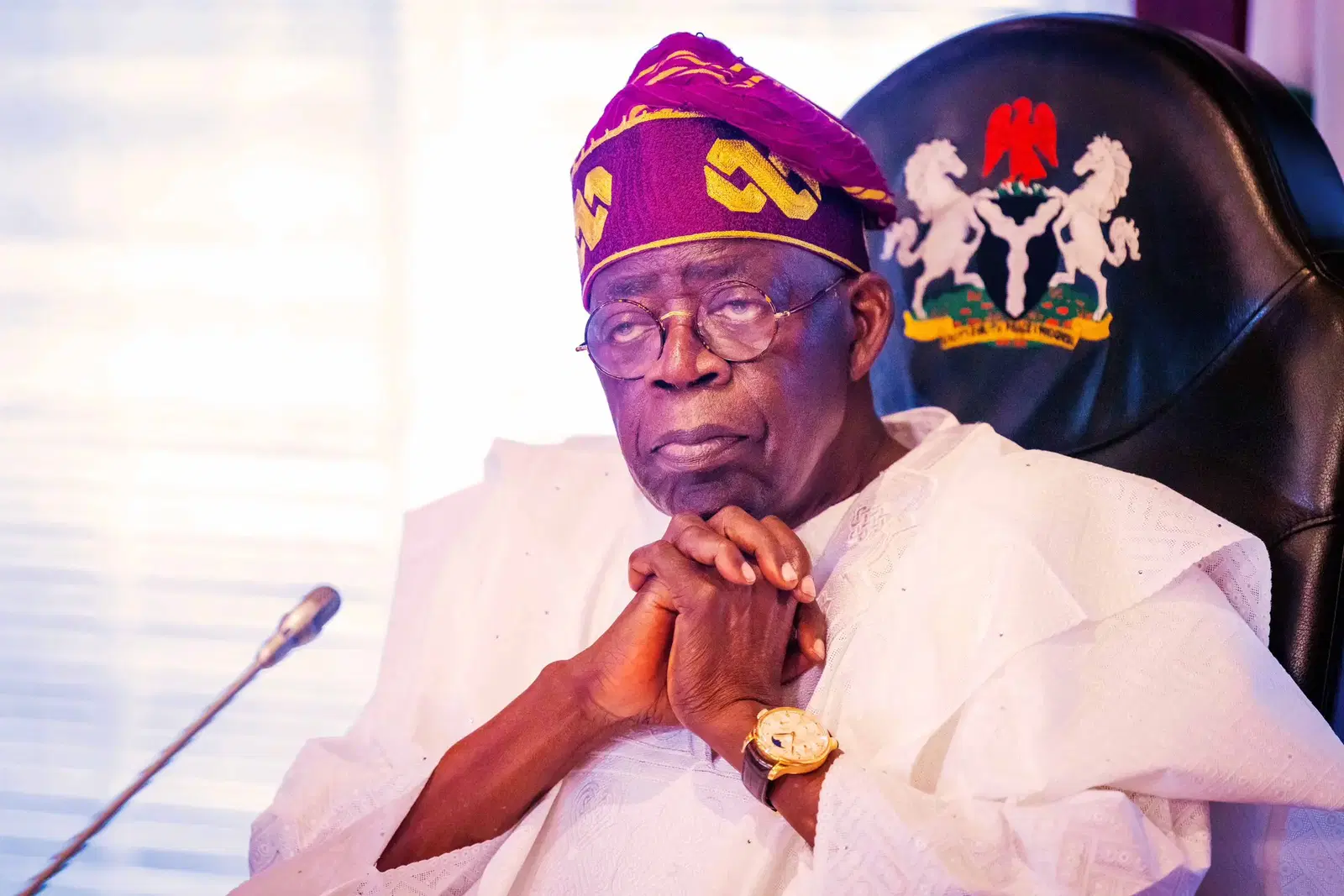
Northern Nigeria youth leaders have formally pledged financial support for President Bola Ahmed Tinubu’s 2027 re‑election bid, with the Northern Nigeria Youth Leaders’ Forum (NNYLF) announcing plans to raise money to fund his campaign as part of a broader youth political mobilisation.
The announcement was made at a gathering of youth stakeholders in Abuja on Monday, January 26, 2026.
In a communique issued at the end of the event, the forum said it would work to “raise money to fund his re‑election campaign in 2027,” affirming youth support for continuity in governance.
The youth group also invited development partners and relevant stakeholders to collaborate with credible youth‑led platforms to enhance impact‑driven programmes across northern Nigeria.
The NNYLF’s endorsement of President Tinubu comes amid heightened political activity ahead of the 2027 general elections. Youth engagement has become a central feature of political advocacy in Nigeria, with various youth organisations announcing support or opposition to major political figures.
Recently, youth groups in Kogi State donated ₦100 million to support President Tinubu’s presidential nomination form, reflecting broader youth mobilisation efforts across regions.
The NNYLF’s declaration emphasised the role of Nigerian youths as key drivers of democratic consolidation and sustainable national development.
According to the forum, structured youth participation in governance and policy processes is critical for ensuring stability, inclusiveness, and meaningful development outcomes nationwide.
At the Abuja event, the communique signed by NNYLF leaders Murtala Mohammed Garba and Dr Agbana John outlined several resolutions.
These included committing to coordinated, peaceful political mobilisation, promoting civic engagement among young Nigerians, and advocating for greater youth representation in governance structures.
The forum also stated that it had raised ₦200 million to purchase President Tinubu’s expression of interest and nomination forms when they become available.
Garba described the financial contribution as a deliberate investment to support policy continuity and reform consolidation under the Tinubu administration.
He reaffirmed the group’s belief that youths, as stakeholders in national progress, must actively engage in political processes that shape the country’s future.
The pledge by a northern youth organisation to fund a presidential re‑election bid reflects evolving trends in Nigerian urban political engagement. Young Nigerians are increasingly organising beyond traditional social and civic activities to participate in formal political advocacy and mobilisation.
For urban entrepreneurs and civic leaders, this trend demonstrates the expanding influence of youth networks in shaping political discourse and public policy priorities.
Political analysts say youth financial support and mobilisation efforts could influence campaign dynamics by signalling broader grassroots engagement and organisational capacity.
As political parties prepare for the 2027 elections, such endorsements may shape candidate positioning and voter outreach strategies, especially in densely populated urban centres across the north.
Conclusion
The Northern Nigeria Youth Leaders’ Forum’s pledge to raise funds for President Tinubu’s 2027 re‑election highlights a proactive youth role in Nigeria’s political landscape.
With youth groups across states mobilising resources and organising support, urban demographics are likely to play a decisive role in shaping political narratives and participation ahead of the general election.