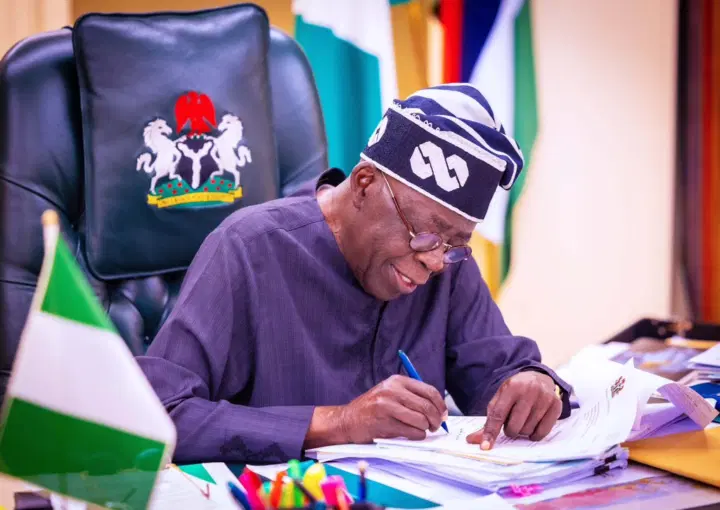
President Bola Tinubu has signed the Electoral Act 2026 (Amendment) into law, formalising changes to Nigeria’s electoral legal framework as the country prepares for the 2027 general elections, a presidential source said.
The National Assembly passed the Electoral Act 2026 (Amendment) Bill on Tuesday, February 17, 2026, following extensive debates and revisions by both chambers of the legislature.
The amendment replaces the 2022 version and incorporates updates to election administration, timelines and related provisions.
The signing occurred at the Presidential Villa in Abuja on Wednesday, February 18, 2026, in the presence of principal officers of the National Assembly, according to reports.
The development comes shortly after the Independent National Electoral Commission (INEC) published the timetable for the 2027 general elections.
President Tinubu’s assent gives legal effect to the amended law, which will govern the conduct of elections for the presidency, National Assembly, governorships and state houses of assembly in 2027.
The law was signed at about 5:00 p.m. on Wednesday at the State House, with lawmakers in attendance.
The amended Electoral Act retains certain provisions as agreed by the National Assembly, including discretionary procedures for election result transmission in areas with telecommunications challenges.
Lawmakers also reviewed timelines for notices and other administrative processes in line with constitutional requirements.
Civil society organisations, opposition figures and other stakeholders had engaged in public discourse in recent weeks, including protests and calls for mandatory real‑time electronic transmission of election results from polling units to the result viewing portal.
Under the new law, the 2027 general elections are scheduled for 20 February for the presidential and National Assembly polls, and 6 March 2027 for governorship and state assembly elections, dates announced earlier by INEC.
The signing of the amended Electoral Act provides legal certainty for electoral stakeholders and sets the framework for political parties, security agencies and electoral bodies to commence preparations ahead of the nationwide polls.
The clarified legal framework will guide candidate nomination processes, campaign activities, voter registration steps and other pre‑election requirements as outlined by the Independent National Electoral Commission.
The law’s provisions on result transmission and timelines reflect compromises reached by lawmakers amid public debate about technological adoption and feasibility across Nigeria’s diverse regions.