President Bola Tinubu has directed the immediate deployment of about 100,000 Compressed Natural Gas (CNG) conversion kits across Nigeria to cushion the impact of rising fuel costs on commuters.
The directive forms part of federal government efforts to address transportation challenges linked to global oil market disruptions caused by the ongoing conflict in the Middle East.
The initiative comes as global energy prices experience volatility due to the United States–Israel conflict with Iran, which has affected international crude oil markets and contributed to increases in petrol and diesel prices.
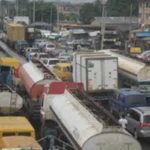
Rising fuel costs have increased transportation expenses across Nigeria, placing pressure on commuters, transport operators, and businesses that rely on road logistics.
The federal government has therefore intensified efforts to expand alternative energy solutions for vehicles.
Executive Chairman of the Presidential Initiative on Compressed Natural Gas (Pi-CNG), Ismaeel Ahmed, disclosed the directive after a meeting with President Tinubu in Abuja.
Ahmed said the President requested updates on measures being taken to address the effects of rising fuel costs on Nigerians.
According to him:
“The President, as usual, is always trying to get information on what is going on, especially with the war in the Middle East and the rising cost of petrol and diesel.”
He added that Tinubu instructed the initiative to accelerate the rollout of gas infrastructure and alternative mobility solutions nationwide so that Nigerians can access cheaper transportation options.
Ahmed said the programme plans to deploy about 100,000 CNG conversion kits within the next two to three weeks.
The kits will allow vehicle owners, including commercial tricycle operators, to convert their engines to run on gas instead of petrol.
The initiative is also expanding infrastructure to support the transition to gas-powered and electric vehicles. According to Ahmed, 77 CNG refuelling stations are currently at various stages of development nationwide.
He cited Kano as an example where two Liquefied Compressed Natural Gas stations are already operational, with additional facilities under construction.
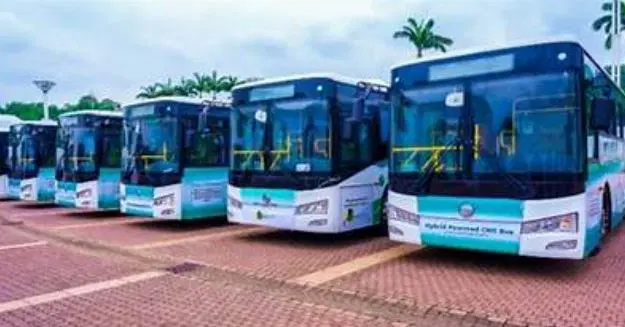
The rollout of CNG conversion kits and new refuelling infrastructure is expected to provide alternative fuel options for vehicle owners and commercial transport operators.
Government officials say expanding gas-powered transportation could help lower operating costs for public transport services and reduce pressure on petrol demand during periods of global oil market disruptions.
The programme also includes collaboration with manufacturers and energy agencies to support the local assembly of gas-powered and electric vehicles, as well as the development of charging infrastructure across major transport corridors.