
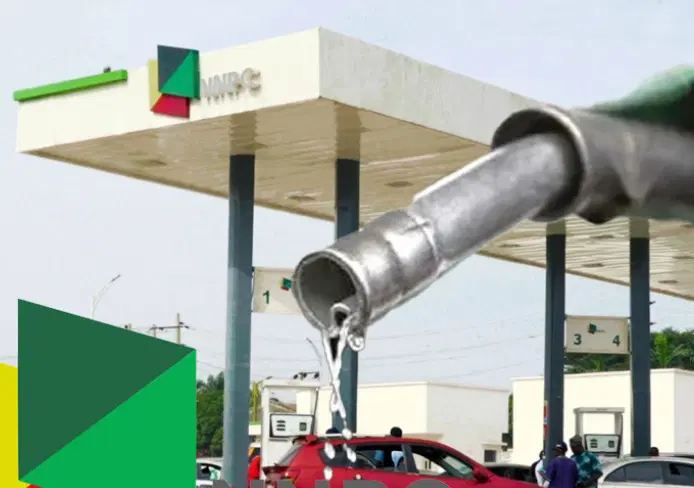
Nigerian National Petroleum Company Limited (NNPC Ltd) has reduced the pump price of Premium Motor Spirit, also known as petrol, at its retail stations to N1,130 per litre in Lagos and N1,165 per litre in Abuja. The new pricing was observed at several NNPC filling stations on Wednesday.
Petrol pricing remains a major issue in Nigeria’s urban economy because it affects transport costs, logistics, and daily consumer spending.
Changes in pump prices often influence the cost of commuting, distribution of goods, and operations of small businesses across major cities.
The latest adjustment by NNPC Ltd reflects ongoing changes in Nigeria’s downstream petroleum market, where retail pump prices may shift in response to supply conditions and pricing decisions by refiners and marketers.
The revised pump price represents a reduction from previous rates charged at NNPC stations in the two cities.
- In Lagos, the price dropped by N100, from N1,230 per litre to N1,130 per litre.
- In Abuja, the price decreased by N95, from N1,260 per litre to N1,165 per litre.
Checks at NNPC retail outlets showed the updated prices displayed at filling stations located along Isheri Oshun Road, Apple Junction and Ago Palace Way in Lagos.
In Abuja, the new pump price of N1,165 per litre was observed at NNPC stations in Jabi and Wuse.
The price adjustment at NNPC stations occurred even though some independent oil marketers had not yet reflected a recent reduction in petrol gantry prices announced by the Dangote Petroleum Refinery.
Dangote Refinery earlier reduced its gantry price of petrol by N100 per litre to N1,075 following a decline in global crude oil prices.
Market data indicated that crude oil prices dropped to about $88 per barrel from around $110 per barrel, while Brent crude also declined by roughly 8.45 percent to about $92 per barrel during the period.
A reduction in pump prices at NNPC stations can influence transportation costs and operating expenses for businesses in major urban centres such as Lagos and Abuja.
Lower fuel prices may also affect commuting costs for workers, logistics expenses for delivery services, and distribution costs for retailers and manufacturers operating within Nigeria’s urban markets.
Fuel price adjustments are closely monitored by transport operators, ride-hailing drivers, small businesses and supply chain operators because petrol remains a key operational input in Nigeria’s urban economy.