
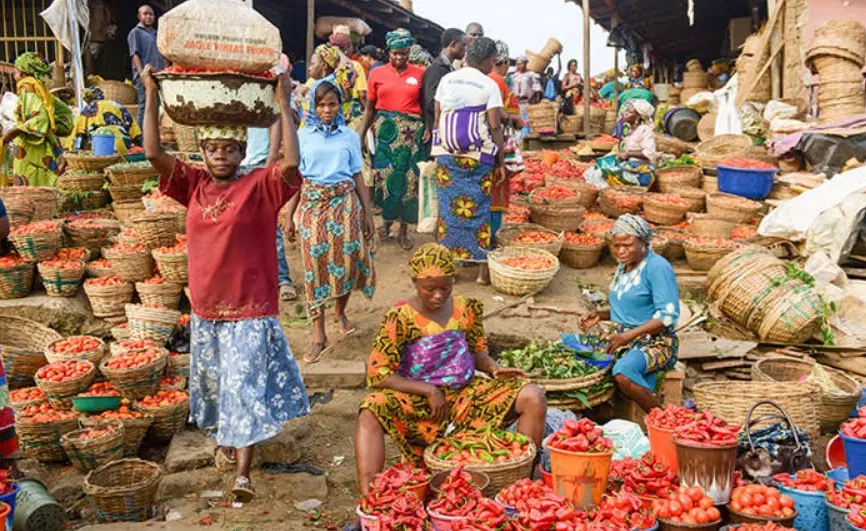
After six months of decline, food inflation in Nigeria increased to 12.12 percent in February 2026, the National Bureau of Statistics (NBS) reported, marking a reversal in the downward trend.
The rise in food prices was driven by higher costs for several staple foods in markets nationwide.
Food inflation measures changes in the prices of food items that are part of household consumption. It is a key indicator for the cost of living because food expenses make up a significant portion of household budgets in Nigeria.
The NBS regularly publishes the Consumer Price Index (CPI), which includes headline inflation and food inflation figures on both yearly (year‑on‑year) and monthly (month‑on‑month) bases.
According to the NBS report, the annual food inflation rate for February 2026 rose to 12.12 percent, up from 8.89 percent in January 2026. This reversal followed a six‑month period of declines in the food inflation rate.
The monthly food inflation rate also increased, moving to 4.69 percent in February from ‑6.02 percent in January 2026.
The statistical agency noted that the increase in food inflation was influenced by higher average prices for a range of food items, including beans, yam flour, cassava tuber, crayfish and other essentials.
Despite the rise in food inflation, the overall headline inflation rate slightly eased to 15.06 percent in February 2026 from 15.10 percent in January 2026.
The NBS also reported regional variations in inflation. Kogi State recorded the highest headline and food inflation rates of 23.57 percent and 26.91 percent, respectively, in February.
Other states, such as Katsina, Imo and Ebonyi, recorded comparatively lower food inflation rates.
Rising food inflation affects consumers and households because it erodes purchasing power and increases the cost of essential goods.
Staple food items such as beans and yam flour are widely consumed, especially by low‑ and middle‑income households, making changes in their prices particularly significant for everyday expenses.
Higher food prices can also influence business operating costs, particularly for small traders and informal market actors who rely on food products for their livelihoods.
While the slight decline in headline inflation suggests broader price pressures may be moderating, the rise in food inflation highlights ongoing challenges in managing the cost of food for consumers.