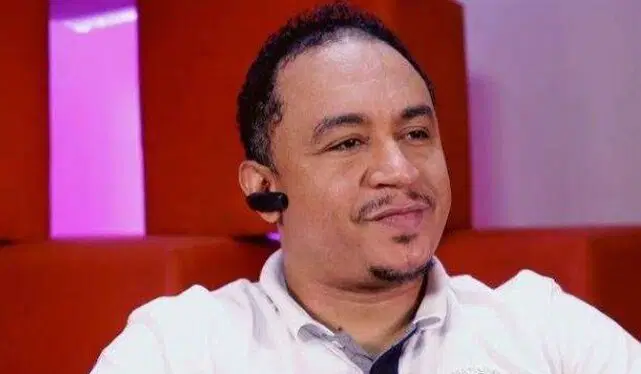
The Daddy Freeze says religion has no impact on Nigeria assertion has generated discussion across social and political circles, as popular media personality Daddy Freeze stated that religious affiliation does not determine Nigeria’s progress and should not be used to divide citizens.
He urged Nigerians to prioritise unity and collaborative action to address national challenges.
Nigeria is a religiously diverse country, with Christianity, Islam, and indigenous beliefs practised across different regions.
Religious identity often plays a significant role in social life, politics, and community organisation. Discussions about the influence of religion on governance and national development have been recurring themes in public discourse.
In this context, the “Daddy Freeze says religion has no impact on Nigeria’s progress” contributes to ongoing national conversations about cohesion, identity, and priorities for collective progress.
Daddy Freeze, whose real name is Ifedayo Olarinde, made the statement during a recent media appearance, where he addressed issues of national unity and the factors that influence development.
According to him, religious labels should not be seen as determining the pace or direction of Nigeria’s growth.
He emphasised that multiple nations with varied religious compositions have achieved progress by focusing on governance, policy, and citizen engagement rather than sectarian differences.
“Religion has no impact on Nigeria’s progress when we choose action over division,” he said in his remarks.
This message drew reactions from followers on social media, where users debated the relationship between religion, identity, and national priorities.
Daddy Freeze highlighted that economic empowerment, education, and institutional accountability are more decisive factors for progress than religious affiliation.
He stated that Nigerians should invest in skills development, entrepreneurship, and civic participation to improve living standards and national outcomes.
He noted that while religion continues to shape cultural life and personal values, it should not be weaponised in ways that undermine social cohesion or political engagement.
The Daddy Freeze says religion has no impact on Nigeria perspective contributes to broader debates about nation-building and collective purpose.
For citizens, such viewpoints may encourage reflection on how identity shapes public engagement and cooperation.
In a country marked by regional and religious diversity, statements that emphasise unity can influence conversations on governance, tolerance, and policy formulation.
People engaged in civic advocacy and youth mobilisation may draw on such positions to promote inclusive agendas.
For policymakers and leaders, the claim underscores the importance of addressing structural challenges such as unemployment, infrastructure deficits, and institutional trust. Without defaulting to religious narratives that can polarise discourse.