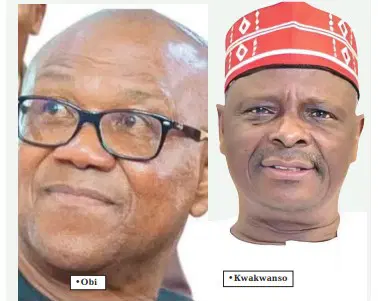
The debate around 2027 power rotation has intensified after the Nigeria Democratic Congress, NDC, officially zoned its presidential ticket to Southern Nigeria and the vice-presidential slot to the North. The resolution was adopted during the party’s maiden national convention held in Abuja. Political observers say the development strengthens the prospects of former Anambra State governor Peter Obi and former Kano State governor Rabiu Kwankwaso within the emerging opposition coalition ahead of the 2027 elections.
The NDC resolution also introduced a single four-year tenure arrangement for its presidential candidate beginning from 2027. According to the party, the presidency would automatically return to Northern Nigeria in 2031 under its zoning framework. Delegates at the convention unanimously endorsed the arrangement as part of efforts to promote political balance and national cohesion.
The decision followed a motion moved by Victor Ogene, the lawmaker representing Ogbaru Federal Constituency in the House of Representatives. Ogene described the arrangement as a moral and political response to Nigeria’s long-standing debate over equity and regional inclusion. He said the 2027 power rotation formula reflected the party’s commitment to fairness and democratic stability.
Political analysts note that the zoning decision potentially creates an opening for Peter Obi to emerge as a leading presidential figure within the coalition. At the same time, Rabiu Kwankwaso’s northern political influence positions him as a significant figure within the evolving alliance discussions.
During the convention, delegates approved that the NDC presidential ticket would remain in the South for only one four-year tenure before rotating Northward in 2031. Party leaders said the arrangement was designed to reduce political tension surrounding regional representation in national leadership.
Peter Obi, while addressing delegates, stated that the coalition was driven by principle rather than political convenience. He said the movement aimed to rebuild Nigeria through governance focused on productivity, security, and economic revival. Obi also warned against weakening opposition politics and stressed the importance of credible democratic competition.
Rabiu Kwankwaso publicly backed the zoning arrangement, describing it as a step toward fairness, inclusion, and national healing. According to him, the 2027 power rotation structure creates an opportunity to strengthen national unity while addressing governance concerns facing the country.
Kwankwaso also linked the country’s current challenges to declining governance quality, insecurity, and economic instability. He urged Nigerians to support broader political participation ahead of the next election cycle.
The zoning arrangement carries major implications for Nigeria’s opposition politics ahead of 2027. Analysts believe the development could reshape coalition negotiations among opposition figures seeking broader electoral support across regions. The 2027 power rotation debate is also expected to influence campaign strategies, voter mobilisation, and alliance-building across the political landscape.
For businesses and investors, political stability remains closely tied to economic confidence and policy continuity. Political transitions often influence investor sentiment, infrastructure planning, and long-term economic projections. Urban professionals and entrepreneurs are therefore expected to closely monitor emerging coalition dynamics ahead of the elections.
The development has also generated reactions from the ruling APC. APC National Chairman Nentawe Yilwatda and Imo State Governor Hope Uzodimma argued that opposition realignments do not currently threaten the ruling party’s electoral strength.