Former Labour Party vice-presidential candidate, Yusuf Datti Baba-Ahmed, has spoken on his move to the Peoples Redemption Party and the emerging Obi and Kwankwaso alliance. He questioned its political strength and internal opposition coordination ahead of the 2027 general elections. Baba-Ahmed said his views reflect personal political analysis, not any formal party position.
Yusuf Datti Baba-Ahmed was the Labour Party running mate to Peter Obi during the 2023 presidential election. The ticket emerged as a major opposition force during a highly competitive electoral cycle. Since then, opposition politics in Nigeria has continued to shift with new alliances under discussion.
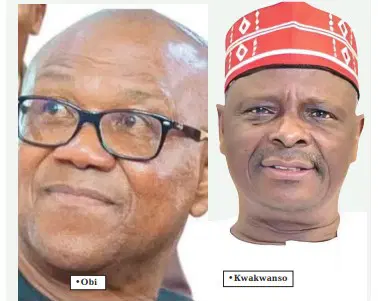
One of the most talked-about developments is the Obi and Kwankwaso alliance. It refers to possible political collaboration between Peter Obi and former Kano State governor Rabiu Kwankwaso. The idea has generated debate among political actors and analysts.
Baba-Ahmed recently aligned with the Peoples Redemption Party. From this platform, he has continued to comment on opposition strategy and political restructuring. His remarks come at a time of increased coalition-building efforts ahead of 2027.
Baba-Ahmed criticised Peter Obi’s exit from the Labour Party during internal disputes. He described such decisions as politically avoidable. He argued that leaders should remain within parties to resolve disagreements. He also raised concerns about the Obi and Kwankwaso alliance. He questioned whether the alliance could translate into strong national electoral support. According to him, political compatibility and voter dynamics remain key challenges.
He said he had earlier encouraged dialogue between Peter Obi and Rabiu Kwankwaso after the 2023 elections. He suggested that opposition unity discussions were necessary to strengthen future electoral chances. Baba-Ahmed maintained that his comments were personal views. He added that both political figures deserve respect. He also stressed that political alliances must be carefully structured to succeed in Nigeria’s electoral environment.
The discussion around the Obi and Kwankwaso alliance highlights ongoing efforts to reshape opposition politics. Coalition building is increasingly seen as necessary for electoral competitiveness in Nigeria. However, challenges remain around regional balance and voter alignment. Northern political sentiment and party structures may influence the effectiveness of such alliances. These factors will likely shape strategic decisions ahead of 2027.
For political stakeholders, the debate underscores the importance of organisation and trust. Without strong internal cohesion, alliances may struggle to translate into electoral success. For urban political observers and voters, the situation reflects early positioning for future elections. It also shows how opposition figures are reassessing strategies after the 2023 polls.