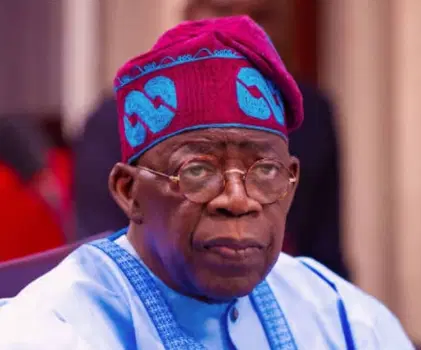
President Bola Tinubu has alleged that entrenched interests benefiting from fuel subsidy payments and exchange rate distortions are resisting his administration’s economic reforms, stating that some of the affected groups “want me dead.” Speaking during the NADECO32 event in Lagos, the President said the activities of oil subsidy cabals and currency market profiteers had contributed significantly to economic distortions in Nigeria.
Tinubu stated that his administration’s decision to remove fuel subsidy and unify the foreign exchange system was aimed at dismantling long-standing structures that benefited a small network of individuals at the expense of national economic stability. According to him, the influence of oil subsidy cabals had for years undermined public finance management and weakened development planning.
Addressing participants at the event, the President said the reforms were difficult but necessary to prevent deeper fiscal challenges. He argued that subsidy payments had become unsustainable and that exchange rate manipulation created opportunities for arbitrage and rent-seeking activities that harmed the wider economy. The remarks formed part of broader comments defending ongoing economic reforms introduced since 2023.
Tinubu said some beneficiaries of the old system had resisted the reforms because of the financial advantages they previously enjoyed. Referring to opposition from entrenched interests, he stated, “The oil subsidy cabals and exchange rate cabals want me dead.” The statement drew attention to the political and economic resistance surrounding the administration’s policy changes.
The President further maintained that the reforms were intended to redirect national resources toward infrastructure, education, healthcare and broader economic development. He noted that continued subsidy spending had placed heavy pressure on government finances while limiting investment in critical sectors.
The issue of oil subsidy cabals has remained central to public discussions on Nigeria’s energy and fiscal policies for several years. Previous administrations had repeatedly cited corruption, fraudulent subsidy claims and opaque fuel import arrangements as major challenges associated with the subsidy regime.
Economic analysts note that the removal of fuel subsidy and exchange rate unification remain among the most consequential economic decisions taken by the current administration. While government officials argue that the measures are necessary for long-term stability, the reforms have also contributed to inflationary pressure, increased transportation costs and broader economic hardship affecting households and businesses.
The President acknowledged the difficulties associated with the transition period but insisted that the reforms are designed to create a more transparent and sustainable economic structure. He stated that dismantling the influence of oil subsidy cabals was essential to reducing leakages and improving fiscal accountability.
Observers say the remarks reflect continuing tensions between reform efforts and vested interests linked to Nigeria’s oil and foreign exchange sectors. The administration has consistently argued that resistance to the reforms is driven largely by individuals and groups negatively affected by changes to the previous system.