
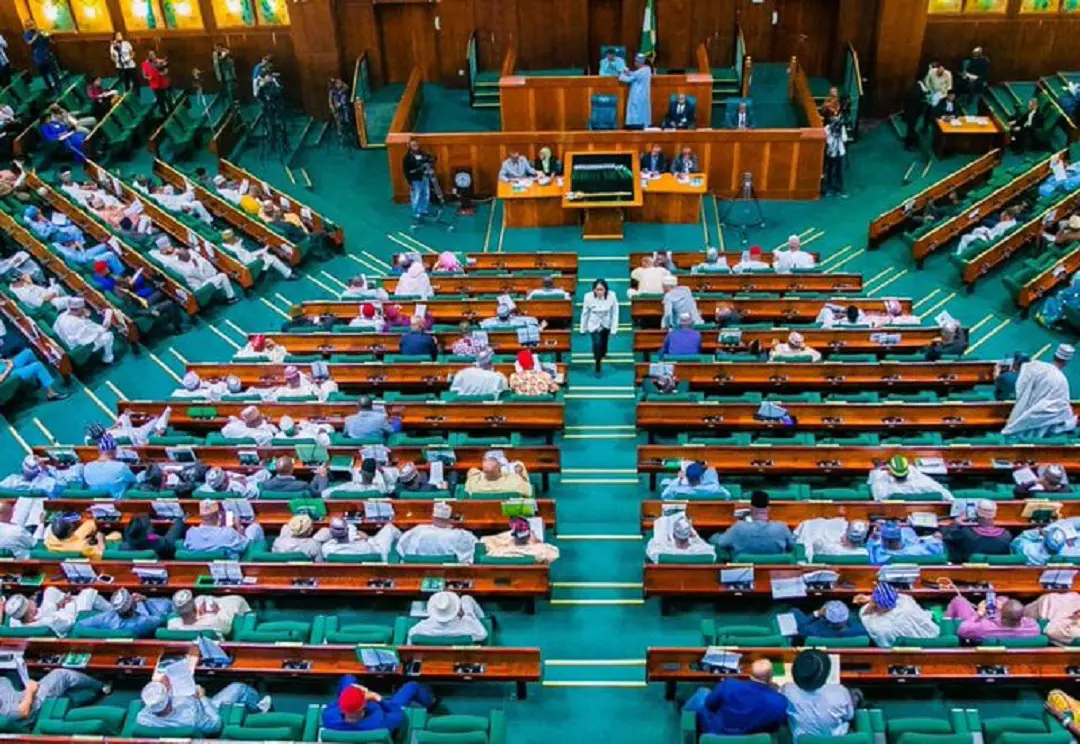
The House of Representatives has stepped down a proposed edible oils bill seeking to prohibit the production, importation, distribution, sale and consumption of unbranded and unfortified cooking oils following a divided debate among lawmakers.
The legislation, sponsored by Rep. Chike Okafor, who represents Ehime/Mbano/Ihitte Uboma/Obowo Federal Constituency of Imo State, was scheduled for second reading on Wednesday but was deferred after members raised concerns over its potential impact and the limited circulation of copies of the bill.
Opening debate on the edible oils bill, Okafor said the proposed law was designed to tackle growing public health risks linked to the widespread consumption of unbranded and unfortified edible oils across Nigeria. According to him, approximately 67 per cent of Nigerians consume unbranded edible oils, while only about 31 per cent of edible oils available in the country are fortified.
He referenced the World Health Organisation (WHO), noting that food fortification remains one of the most effective and affordable methods of addressing micronutrient deficiencies and improving public health outcomes.
The lawmaker explained that the bill seeks to outlaw the production, importation, distribution and sale of unbranded and unfortified edible oils while encouraging collaboration between research institutions, universities, state governments and private investors to improve oil seedlings and establish more processing facilities through public-private partnerships.
He added that the legislation also provides penalties, including prison terms for violators, while allowing producers and marketers a transition period to comply with the proposed requirements. Describing the issue as one affecting the wellbeing of Nigerians, Okafor argued that stronger legal measures were necessary to protect public health.
Several members, however, opposed the proposed legislation, warning that it could negatively affect thousands of small-scale palm oil producers across rural communities.
Rep. Paschal Agbodike, representing Ihiala Federal Constituency of Anambra State, cautioned that many families depend on local palm oil production for their livelihoods. He urged lawmakers to consider the economic implications of the bill before proceeding, stressing the importance of protecting rural businesses.
Other lawmakers argued that the objectives of the proposed edible oils bill already fall within the responsibilities of existing regulatory agencies. Rep. Gaza Gbefwi, representing Karu/Keffi/Kokona Federal Constituency of Nasarawa State, maintained that the National Agency for Food and Drug Administration and Control (NAFDAC) already possesses the legal authority to regulate edible oils and other food products.
He suggested that rather than creating additional legislation, lawmakers should strengthen existing laws or amend the enabling Acts of agencies such as NAFDAC and the Standards Organisation of Nigeria (SON) where necessary. Rep. Wale Raji, representing Epe Federal Constituency of Lagos State, expressed a similar position, stating that NAFDAC’s current mandate already addresses many of the issues raised in the bill.
Backing the legislation, Rep. Sada Soli, representing Jibia/Kaita Federal Constituency of Katsina State, argued that the bill would complement rather than duplicate the work of existing regulators. According to him, the proposal seeks to strengthen the current regulatory framework without undermining local palm oil production.
During the debate, Rep. Billy Osawaru, representing Orhionmwon/Uhunmwonde Federal Constituency of Edo State, observed that several lawmakers had not received copies of the bill, limiting their ability to fully examine its provisions.
Responding to the concerns, Okafor requested that the legislation be stepped down to allow broader circulation of the document and further consultations with relevant stakeholders. Deputy Speaker Benjamin Kalu, who presided over the plenary, granted the request and postponed further consideration of the edible oils bill to a future legislative date.
The proposal comes amid renewed national discussions on food safety and nutrition. Although mandatory food fortification programmes are already supervised by NAFDAC and the Standards Organisation of Nigeria, concerns over the continued sale of unbranded and informally processed edible oils have fuelled calls for stronger enforcement of existing standards.