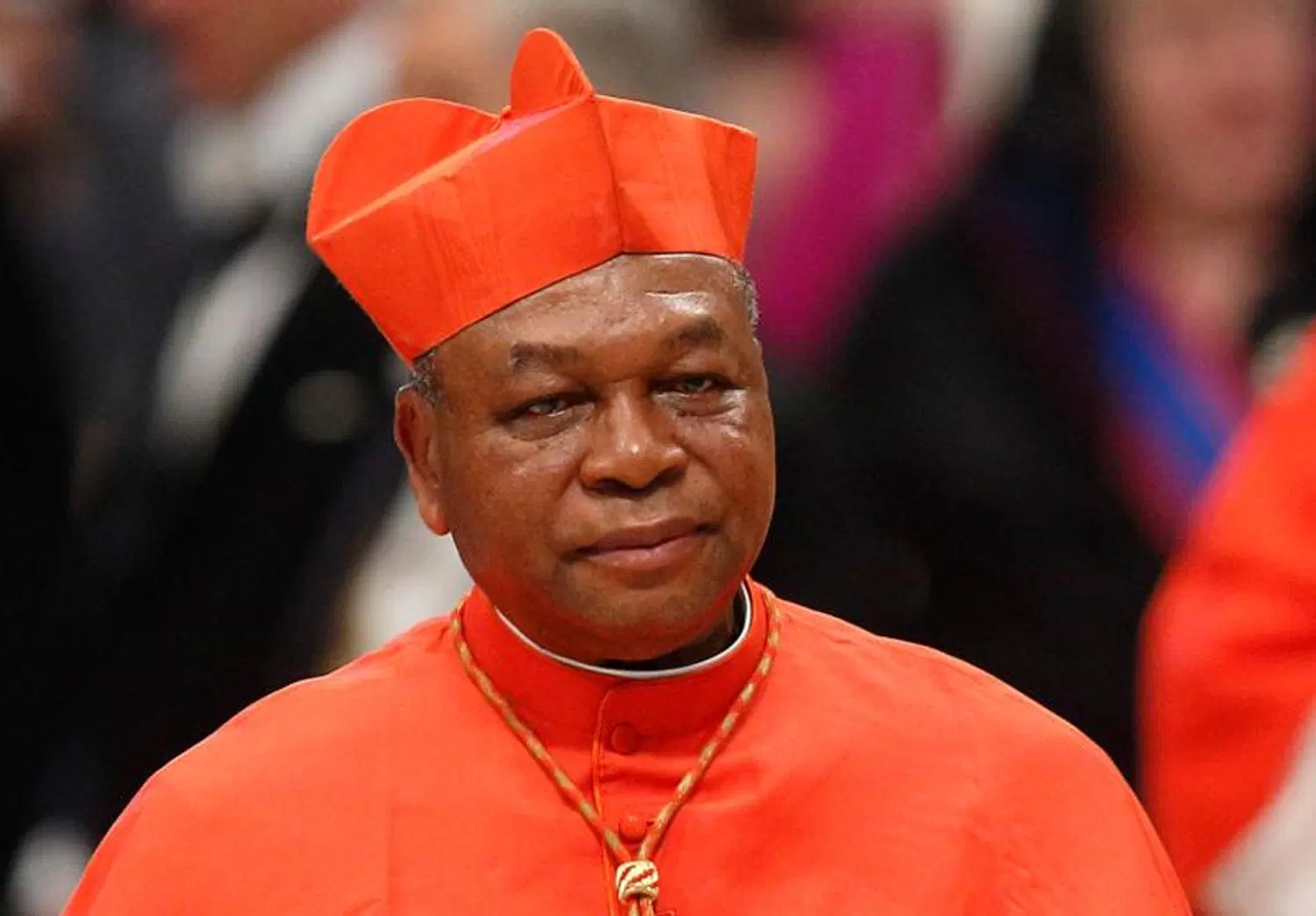
Archbishop Emeritus of the Catholic Archdiocese of Abuja, John Onaiyekan, has disclosed that President Bola Tinubu rejected the Catholic Bishops’ assessment of Nigeria’s economy, security situation and democratic climate during a recent meeting at the Presidential Villa.
Tinubu met with members of the Catholic Bishops’ Conference of Nigeria on July 28, 2026, after the clerics raised concerns over worsening economic hardship, insecurity and the state of governance in the country. Speaking on Prime Time on Arise News on Friday, Onaiyekan said the President made it clear that he did not share the bishops’ position.
“When the nation is bleeding, you cannot expect a polite meeting with the Head of State. We told him the economy is not helping our poor people; he told us the economy is doing fine. Frankly speaking, he told us quite clearly that he did not agree with us,” the cleric said.
According to him, the bishops never expected the President to accept their views without reservation. “We didn’t expect him to agree with us. We have done our duty, we have delivered our message, and we have a feeling that somehow, along the line, somebody will show him a few of the things we said,” he added.
Onaiyekan explained that the memorandum submitted to Tinubu reflected the collective position of the Catholic Bishops’ Conference after consultations across different parts of the country. He stressed that the church was not engaging in partisan politics but carrying out its moral responsibility to speak on issues affecting Nigerians.
“We are not politicians running for office. We are religious leaders who feel we have a duty not just to preach our doctrines but also to address the lives of our people,” he said.
The former Archbishop noted that the bishops deliberately chose to present the difficult realities confronting citizens rather than paint an overly positive picture of national conditions. He expressed satisfaction that the President listened attentively and responded directly to the issues raised during the meeting.
Despite the engagement, Onaiyekan said he was worried that many government officials were unwilling to speak frankly to the President. He described the absence of honest feedback within government circles as a major challenge capable of affecting decision-making.
The cleric also defended the bishops’ warning about what they described as the gradual emergence of a one-party dominant political environment. According to him, democracy can only thrive where elections are credible and all political parties operate on a level playing field.
Responding to Tinubu’s defence of the Independent National Electoral Commission (INEC), Onaiyekan argued that public confidence in the electoral body would remain weak as long as its leadership continued to be appointed by the President.
He called for reforms aimed at strengthening trust in the electoral process and protecting democratic institutions. The cleric concluded by urging the Federal Government to place greater emphasis on addressing the country’s economic and security challenges rather than celebrating policy achievements, insisting that Nigerians deserve better governance and more effective leadership.