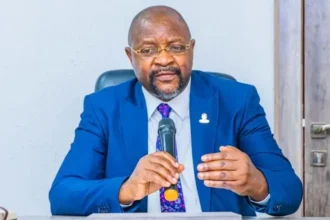
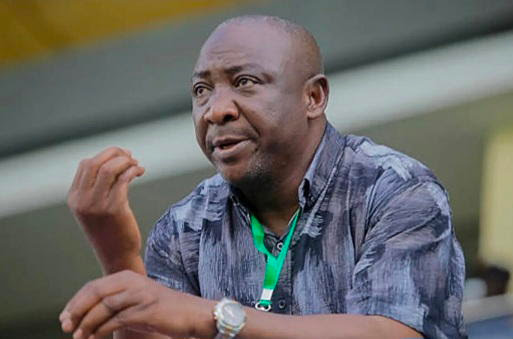
The President of the Nigeria Football Federation (NFF), Ibrahim Gusau, and several members of the federation’s executive board have resigned amid mounting pressure over the administration of Nigerian football.
The resignations come after a series of disappointing results involving the country’s national teams and growing scrutiny of the federation’s management of funds released by the Federal Government.
The latest crisis followed Nigeria’s failure to qualify for the 2027 FIFA Women’s World Cup, marking the first time the Super Falcons have missed the tournament since its inauguration in 1991.
The Falcons’ qualification hopes suffered a major setback after they lost 2-1 to South Africa’s Banyana Banyana in the World Cup qualification playoff.
The development intensified calls for changes within the NFF, whose leadership had already faced criticism over the performance and administration of Nigeria’s national teams.
The resignation also comes against the backdrop of an investigation by security agencies into the utilisation of a N17 billion Federal Government intervention fund released to the NFF.
The fund was approved by President Bola Tinubu in 2024 to settle outstanding wages and bonuses owed to players representing the country’s national teams.
A source familiar with the matter said the Department of State Services (DSS) had requested documents and explanations concerning the utilisation of the funds.
The source described the investigation as a routine examination of financial records and dismissed suggestions that officials were being subjected to a witch-hunt.
The probe has further intensified attention on the management of Nigerian football at a time when the country has struggled to maintain its previous international standards.
The Super Eagles have also missed consecutive FIFA World Cup tournaments, while the Super Falcons’ failure to qualify for the 2027 competition has added to concerns over the state of Nigerian football.
The NFF executive committee led by Gusau had reportedly come under sustained pressure to resign following the series of setbacks.
More than half of the federation’s 13-member board have allegedly now left their positions, with eight members reported to have resigned.
The mass departures have raised questions about the future of the current NFF administration and the federation’s ability to proceed with its planned electoral programme.
The NFF had scheduled its next board elections for September 27 in Lafia, Nasarawa State.
However, the latest resignations could affect the planned election timetable and create uncertainty over the federation’s immediate leadership structure.
The developments have also placed renewed focus on calls for accountability, financial transparency and reforms in the administration of Nigerian football.
With the leadership crisis unfolding alongside investigations into the federation’s finances and continued concerns over national-team performances, pressure is mounting for a new direction in the management of the country’s football affairs.