
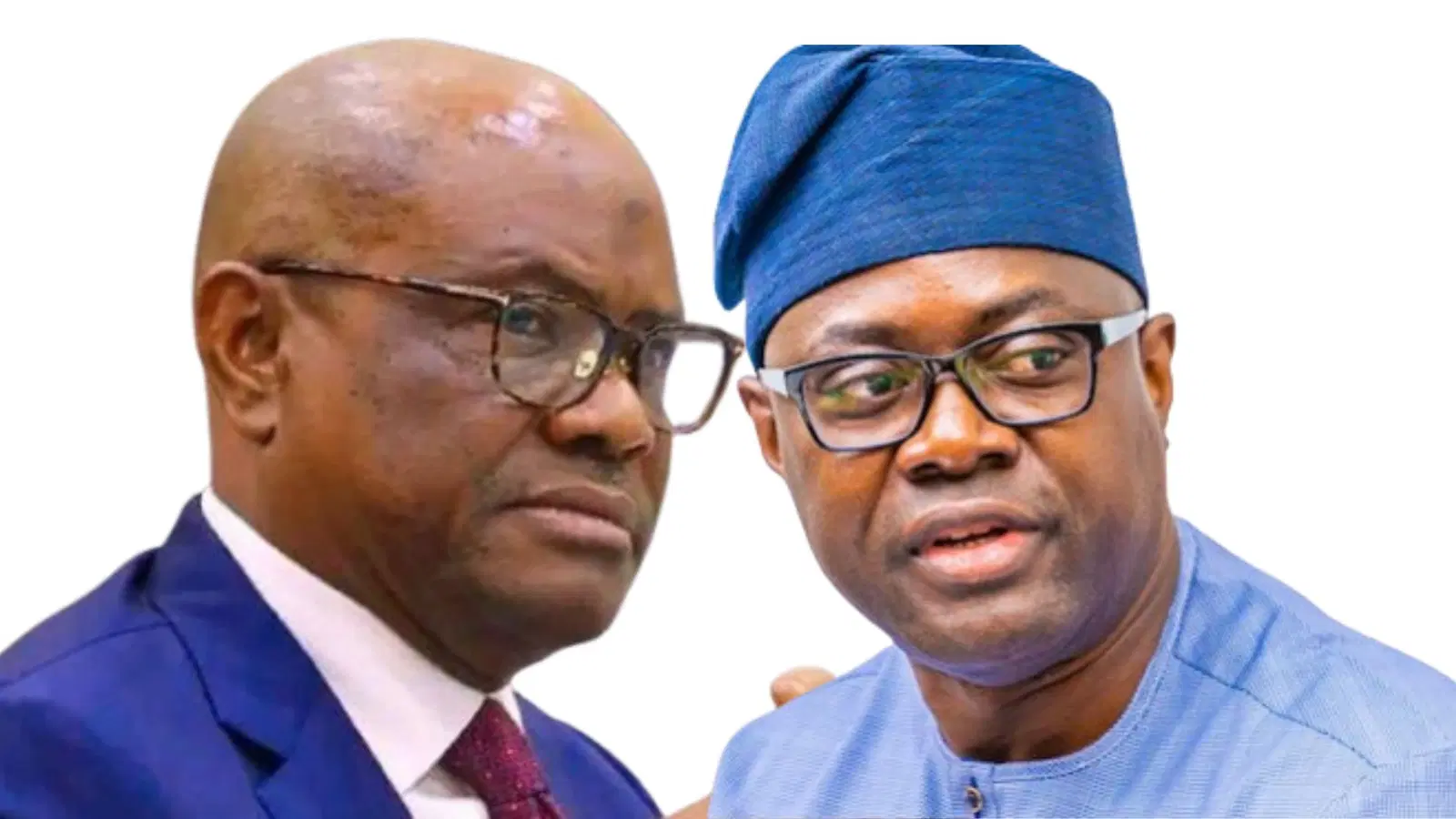
Former Rivers State Governor and PDP stalwart Nyesom Wike has publicly criticised Seyi Makinde and Bola Fubara, highlighting ongoing internal tensions within the People’s Democratic Party (PDP). Wike’s commentary reflects broader concerns about leadership disputes, candidate positioning, and strategic direction within the party.
Speaking at a political forum, Wike emphasised that the party’s cohesion and electoral effectiveness are being undermined by competing ambitions and lack of consensus on governance priorities. He called for urgent internal dialogue to reconcile differences and restore confidence among members, stakeholders, and the electorate.
Analysts note that such disputes may affect PDP’s preparedness for upcoming elections, public perception, and the party’s ability to present a unified policy agenda. Internal disagreements can also influence candidate selection processes and strategic alignments across states.
For Nigerian citizens and voters, the PDP crisis underscores the need for political actors to prioritise transparency, internal democracy, and consistent communication. Observers suggest that addressing factionalism proactively can enhance the party’s credibility and strengthen its role in national political discourse.
Wike’s remarks also highlight the challenges of managing diverse interests within a major political organisation. Effective resolution mechanisms, adherence to party constitutions, and inclusive decision-making are cited as necessary steps to stabilise internal dynamics and prevent further erosion of public confidence.
Political commentators stress that the ongoing crisis presents both risks and opportunities. By implementing structured reforms and fostering dialogue, PDP could reinforce its institutional integrity, policy coherence, and capacity to serve as an effective opposition or governing alternative.
The episode illustrates the critical importance of leadership accountability, conflict management, and strategic planning within Nigerian political parties. Ensuring institutional resilience and prioritising collective objectives over individual ambitions are essential to sustaining public trust and functional democracy.