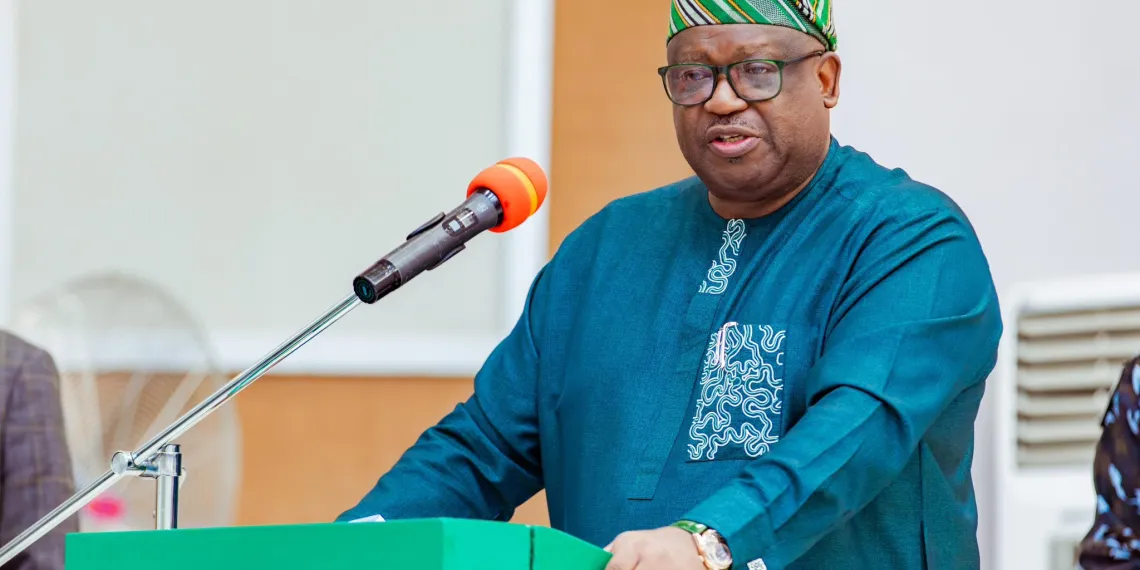
Plateau State Governor Caleb Mutfwang has formally resigned from the Peoples Democratic Party (PDP), two weeks after announcing his defection to the All Progressives Congress (APC). The resignation, conveyed through a letter addressed to his ward leadership, marks a significant political realignment in the North Central region with potential implications for governance, investment confidence, and regional development planning.
Governor Mutfwang’s move comes at a time when political stability is closely watched by businesses, development partners, and investors operating in Plateau State. As an agrarian and tourism focused state with growing urban centres such as Jos, Plateau’s political direction influences policy continuity, infrastructure development, and private sector engagement.
In his resignation letter, Mutfwang cited alignment with national leadership and the need to pursue his administration’s development agenda without institutional friction. The governor had previously secured his electoral mandate under the PDP platform before crossing over to the APC, Nigeria’s ruling party at the federal level. The formal exit now completes the procedural aspect of his political transition.
Political analysts note that defections at this level often reshape local power structures and affect legislative cooperation. For urban entrepreneurs, contractors, and service providers, party alignment between state and federal governments can determine access to funding, approvals, and collaborative projects. Plateau State’s infrastructure pipeline, including road rehabilitation, urban renewal, and agricultural value chain investments, may now experience renewed federal engagement.
The development also has implications for governance certainty. Investors and business operators tend to favour environments where policy direction is predictable and administrative bottlenecks are reduced. Mutfwang’s alignment with the ruling party may streamline coordination with federal agencies overseeing energy, transport, and housing projects critical to Plateau’s urban economy.
However, the move has also generated debate within political circles and civil society. Some observers express concerns about weakening opposition structures, while others view the defection as a pragmatic step aimed at securing development outcomes. For young professionals and business owners in the state, the primary interest lies in whether the shift delivers tangible improvements in service delivery, job creation, and economic growth.
Plateau State’s economy has significant potential in agriculture, mining, tourism, and small scale manufacturing. Urban centres like Jos are increasingly home to startups, creative enterprises, and service businesses that rely on stable governance and supportive policy frameworks. Political transitions that enhance access to capital projects and federal programs could accelerate these sectors.
From a broader national perspective, the defection reflects ongoing fluidity within Nigeria’s political landscape ahead of future electoral cycles. Such movements often influence policy debates, budget negotiations, and development priorities at both state and federal levels.
As Governor Mutfwang settles fully into his new political alignment, attention will focus on how the change translates into governance outcomes. For Plateau residents and the wider business community, the key measure will be whether the shift strengthens institutional performance and unlocks opportunities for sustainable urban and economic development.