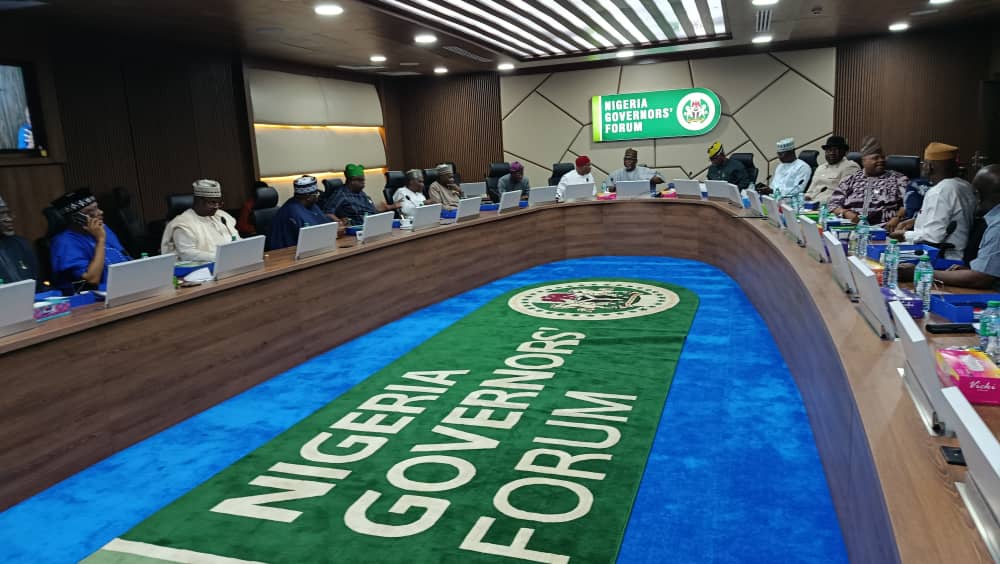
State governments across Nigeria allocated a combined N525.23 billion to security votes and related operations between 2023 and 2025, according to an analysis of budget figures from 32 states, even as killings, kidnappings and other forms of violent crime continue to spread across the country.
The data highlights broad fiscal commitments to security by subnational authorities amid persistent insecurity with limited visible improvements in public safety.
Security votes are special budgetary allocations designated for sensitive operations such as crisis response, intelligence gathering, and other rapid action needs that fall outside regular government expenditures.
In Nigeria, insecurity remains a pressing challenge, with armed robbery, banditry and kidnappings affecting urban and rural communities alike.
Governors often cite escalating threats as justification for expanding security-related spending, even though the primary constitutional responsibility for national security lies with the Federal Government.
Experts and civil society organisations have repeatedly called for better coordination between federal, state and local authorities to address crime and violence more effectively, arguing that entrenched insecurity has broad implications for economic development, citizens’ safety and investor confidence.
President Bola Tinubu recently underscored the importance of security in national development plans, noting that peace and stability are preconditions for sustainable growth, and advocating for integrated security frameworks involving state and community actors.
Analysis of approved budgets over the three-year period shows security vote allocations rising from N150.47bn in 2023 to N164.07bn in 2024, before jumping to N210.68bn in 2025, reflecting a 40.01 percent increase over two years.
Several states accounted for significant shares of the total security vote spending. Borno State recorded the highest allocation at N57.40bn, driven by ongoing counter-insurgency needs, followed by Anambra (N42.57bn), Delta (N38.44bn) and Benue (N36.87bn).
Ondo (N31.72bn), Zamfara (N31.40bn), Edo (N29.21bn) and Adamawa (N27.00bn) were other major contributors to the total figure.
By contrast, some states disclosed very low or negligible security votes, with Rivers reporting N210m, Akwa Ibom N624m, and Ekiti only N3.1m over three years, highlighting wide disparities in reported spending.
Regional breakdowns indicate that the North East accounted for the largest share of disclosed spending, followed by the South East, South South, North Central, North West and South West zones, with the last experiencing a notable rise in allocations in 2025.
Despite the substantial allocations, insecurity continues to escalate in many regions, casting doubt on the effectiveness and transparency of security vote utilisation.
Critics argue that the secrecy surrounding security vote disbursements undermines accountability and may allow mismanagement or diversion of funds without clear measurable outcomes.
Public sentiment has increasingly questioned how these large sums are being deployed to protect lives and property when violent crime persists in major towns and cities.
Labour groups and community advocates have urged state and local authorities to complement financial allocations with robust oversight, improved intelligence-led policing, community-based initiatives and partnerships with federal security agencies.
They stress that sustainable gains in public safety require not only fiscal inputs but also strategic planning, performance tracking and civic engagement.
The N525.23bn security vote allocation by Nigeria’s governors between 2023 and 2025 underscores the high fiscal priority placed on countering insecurity at the subnational level. However, the continued spread of violence raises urgent questions about deployment, oversight and impact of these funds.
Strengthening transparency, aligning budgets with measurable security outcomes, and fostering collaborative frameworks between federal, state and local authorities will be key to translating financial commitments into tangible improvements in public safety across Nigeria.