A prosecution witness in the terrorism trial over the June 5, 2022 attack on St Francis Xavier Catholic Church in Owo, Ondo State, told the Federal High Court in Abuja how the coordinated assault left her permanently disabled, costing her both legs and her left eye.
The testimony from the nurse, identified as SSD, highlights the brutal human impact of the massacre that killed more than 40 worshippers and wounded many others.
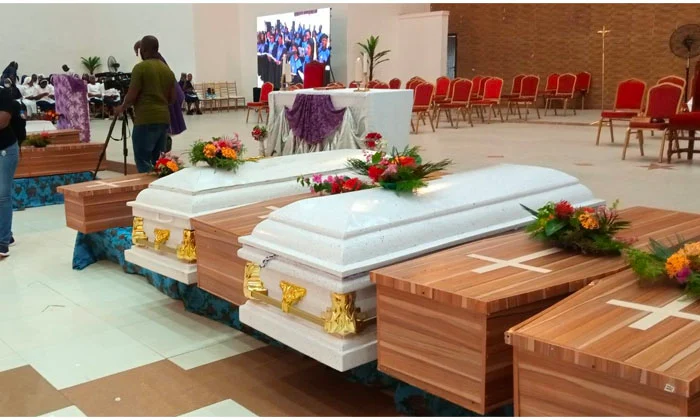
The Owo church attack is one of Nigeria’s deadliest acts of violence against civilians in recent years. Gunmen stormed the church during Pentecost Sunday service, shooting worshippers and detonating explosives in crowded areas.
The Department of State Services (DSS) is prosecuting five men — Idris Abdulmalik Omeiza, Al Qasim Idris, Jamiu Abdulmalik, Abdulhaleem Idris and Momoh Otuho Abubakar — on a nine‑count terrorism charge for their alleged roles in the massacre. All have pleaded not guilty.
Recalling the attack, SSD said she initially mistook the first gunshots for celebratory firecrackers before realising something was amiss. She described running for cover and then hearing a loud blast she believed was from a dynamite device.
“I touched my eyes, everywhere was bloody … I touched my legs, I couldn’t feel anything, only the rags and the dangling part of my shattered leg,” she told Justice Emeka Nwite, recounting how she was later dragged from the rubble and taken to hospital.
Doctors amputated both her legs above the knee, and she lost her left eye, which has since been replaced with a prosthesis. She spent more than five months receiving medical care and now uses a wheelchair.
Her husband, who also testified under the pseudonym SSE, corroborated the account and said he was forced to wade through corpses while searching for his missing son amid the chaos. He confirmed signing for his wife’s amputations at the hospital and detailed the family’s struggle to cope with her long‑term injuries.
The testimony lays bare the enduring trauma faced by survivors and families of victims from the Owo massacre. Beyond the immediate loss of life, many survivors continue to live with life‑altering injuries and psychological scars.
The witness’s account also underscored perceived gaps in ongoing support: while the former Ondo State government once promised prosthetic legs for SSD, the vendor allegedly failed to deliver before the administration’s tenure ended, and the current government has yet to provide assistance.
The proceedings also reflect broader challenges in prosecuting terrorism cases in Nigeria, where gathering evidence and securing reliable witness testimonies remain critical to achieving accountability. The vivid personal narratives emerging in court may influence public and judicial perception of the severity and human cost of such attacks.
As the trial of the accused Owo church attackers continues, the testimony of survivors like SSD offers powerful insights into the personal toll of extremist violence and the long road to recovery for victims.
Beyond legal consequences for the accused, the case highlights urgent needs for sustained support for survivors and structural measures to protect places of worship and other vulnerable civilian targets. Pending continuation of the trial, scheduled for February 10 and 11, the court is expected to hear further DSS evidence in pursuit of justice for victims and their families.