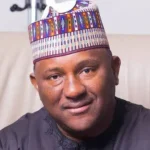
Sixty years after the January 15, 1966 military coup that ended Nigeria’s First Republic, retired Major-General Ibrahim Bata Malgwi (IBM) Haruna has said the political and ethnic tensions of the era made a coup “inevitable,” challenging long-held narratives about the event’s causes.
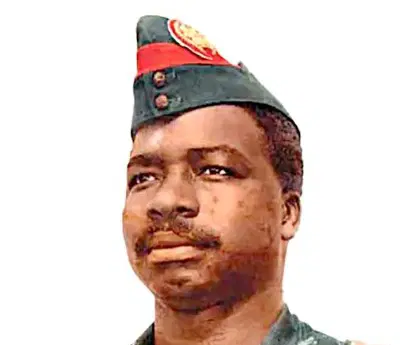
In an interview marking the anniversary, General Haruna, a former Federal Commissioner for Information and Culture and past chairman of the Arewa Consultative Forum, argued that the structural imbalances and regional rivalries rooted in Nigeria’s early post-independence period laid the ground for the coup led by Major Chukwuma Kaduna Nzeogwu.
On January 15, 1966, a group of military officers led by Major Nzeogwu launched a coup that overthrew the civilian government and ended the First Republic, eventually triggering the Nigerian Civil War from 1967 to 1970.
The coup has often been discussed in ethnic terms, partly because many of the coup’s leaders were of Igbo extraction, but the events are widely acknowledged as rooted in deeper governance issues that plagued the young nation after independence in 1960.
Nigeria’s federal structure after independence featured three major regions with unequal population sizes and economic resources. This imbalance created political and economic tensions among regions, complicating efforts to share power and manage national governance.
Haruna, drawing on his experience as a commissioned officer and historian of the era, said the lack of clear power distribution and rising political conflicts made the country ripe for intervention by the military.
In the interview, Haruna noted that the military officers who led the coup were largely of the same generation, many trained together and equally disillusioned by the political chaos and perceived corruption of civilian politicians.
“We were given independence on the basis of a federation, but we operated as if it were between a confederation and a federation. It was not clearly spelt out,” he said, emphasising that unequal regional expectations and governance failures heightened tensions.
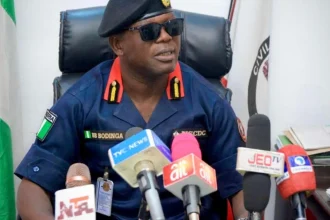
Haruna also described how disparities in recruitment and leadership within the army and police — with certain regions being overrepresented — contributed to frustration within the security apparatus. He argued that these internal divisions mirrored the broader political fractures in the country and made the coup a likely outcome of the era’s instability.
Haruna’s assessment adds nuance to debates about the legacy of the 1966 coup and how early national tensions continue to influence Nigeria’s political and social landscape.
By framing the coup as a product of structural imbalance rather than narrow ethnic intent, his perspective encourages reflection on longstanding governance challenges, including regional inequality and institutional weakness.
For policymakers and historians, this interpretation highlights the importance of addressing foundational issues in federal arrangements, security sector reforms and inclusive governance to prevent similar ruptures in the future.
It also underscores how unresolved historical grievances and structural inequities can persist across generations, shaping public discourse about national identity and unity.
As Nigeria marks six decades since the 1966 coup, Haruna’s remarks remind citizens and leaders alike that historical forces, systemic imbalances, and governance shortcomings — rather than simplistic ethnic explanations — underpin some of the nation’s most transformative moments.
His reflections offer a lens through which to examine not only past upheavals but also ongoing discussions about federal equity, security, and democratic stability in Nigeria’s evolving political landscape.