Former Vice President Atiku Abubakar says his son Abba’s move to join the APC is a personal decision and normal in a democracy, amid broader political realignments ahead of 2027.
Former Vice President and 2023 Peoples Democratic Party (PDP) presidential candidate Atiku Abubakar has described his son Abba Abubakar’s defection to the All-Progressives Congress (APC) as entirely personal and not alarming, even as the move underscores shifting political dynamics ahead of the 2027 general elections.
Atiku said choices made by family members are part of democratic freedom and do not reflect his own political direction.
Abba Abubakar’s defection from the PDP to the ruling APC was formally announced at the National Assembly Complex in Abuja when he was received by Senator Barau I Jibrin, Deputy President of the Senate, and other APC leaders from the North-East geopolitical zone.
The younger Atiku also pledged to work for President Bola Ahmed Tinubu’s re-election in 2027, signalling a notable realignment well before the next general elections.
Political defections, particularly from opposition to ruling parties, have become a recurring feature in Nigeria’s political landscape as aspirants and power brokers reposition ahead of major elections.
Abba’s move also saw his grassroots political structure, formerly the Haske Atiku Organisation, reoriented to support the APC’s Renewed Hope Agenda.
In a statement shared on social media, Atiku emphasised that his son’s decision was a matter of individual conscience rather than a commentary on family loyalty.
“The decision of my son, Abba Abubakar, to join the APC is entirely personal. In a democracy, such choices are neither unusual nor alarming, even when family and politics intersect,” Atiku said.
He added that as a democrat, he does not influence personal political decisions: “I do not coerce my own children in matters of conscience, and I certainly will not coerce Nigerians.”
However, Atiku also used the opportunity to critique the APC’s governance record, saying his primary concern remained the state of the nation under the ruling party’s leadership.
Atiku stated: “What truly concerns me is the poor governance of the APC and the severe economic and social hardships it has imposed on our people. I remain resolute in working with like-minded patriots to restore good governance and offer Nigerians a credible alternative that brings relief, hope and progress.”
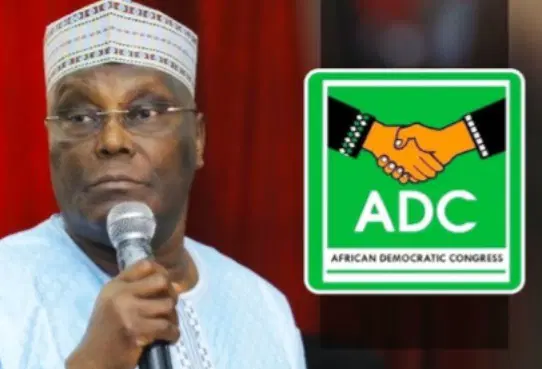
Atiku’s framing of the defection as personal seeks to manage potential political fallout within his own support base and the broader opposition coalition he is building, particularly after his exit from the PDP to the African Democratic Congress (ADC).
Abba’s move to the APC may be interpreted by analysts as symbolic of broader tensions and realignments within Nigeria’s political elite ahead of the 2027 elections.
For the APC, welcoming a high-profile figure from a leading opposition family offers both political leverage and optics, particularly in strategic regions like the North-East.
Political strategists suggest that defections of prominent individuals can influence grassroots mobilisation and voter perceptions, though they do not guarantee broader shifts in electoral outcomes.
Atiku Abubakar’s assertion that his son’s defection to the APC is a personal choice highlights the interplay between family, democratic rights and political strategy in Nigeria’s evolving political landscape.
As the country heads toward the 2027 general elections, such high-profile shifts underscore the competitive nature of party politics and the fluidity of political alliances. For voters and party stakeholders, the episode underscores the complexity of electoral positioning and the importance of individual agency within broader political movements.