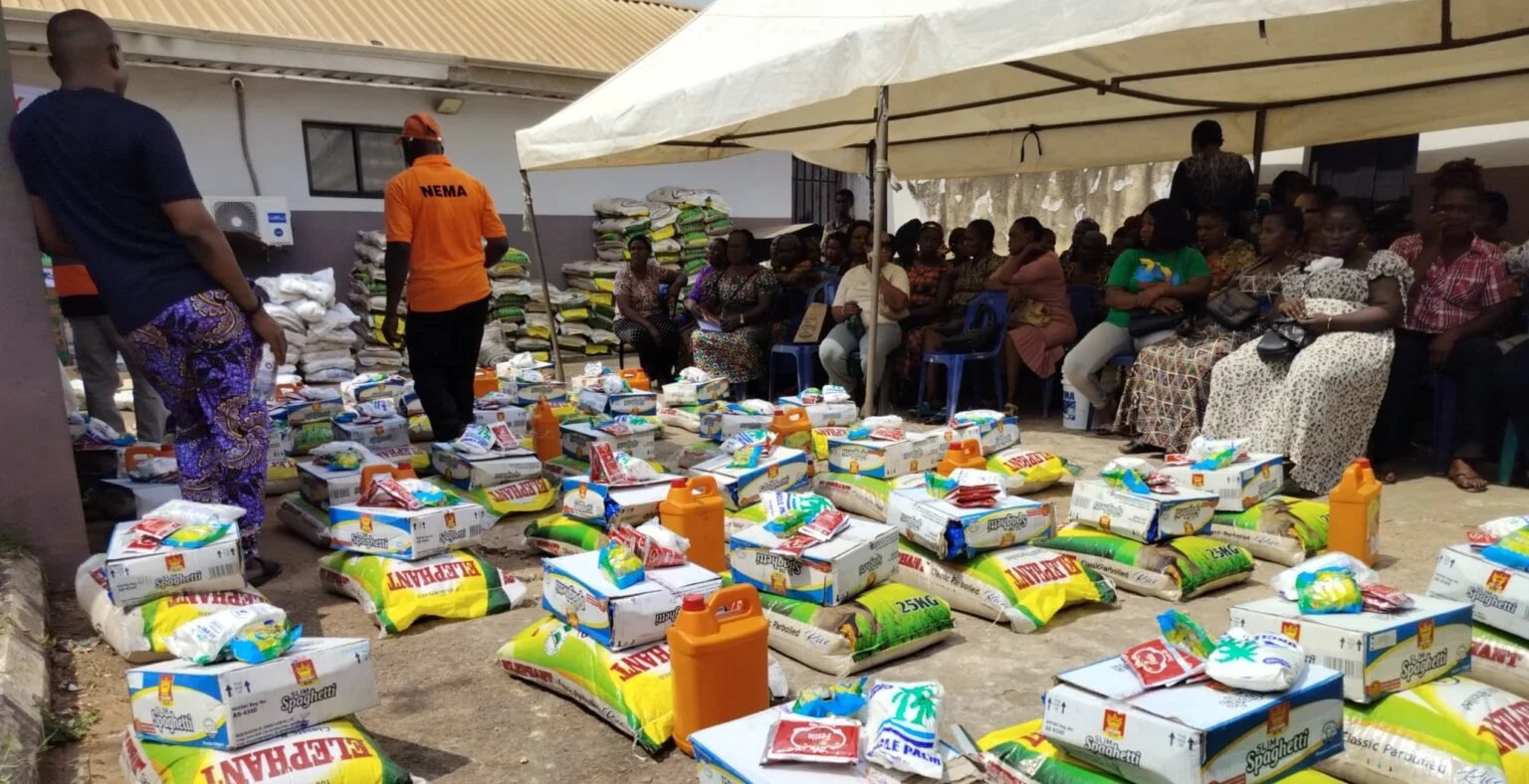
The National Emergency Management Agency (NEMA) said it carried out 87 relief interventions in 2025, providing emergency aid to about 17,000 people displaced by a range of disasters including banditry, flooding, windstorms and fire outbreaks across the North‑West zone of Nigeria.
Mr. Sani Lokoja, NEMA’s North‑West Zonal Director, disclosed this while briefing the News Agency of Nigeria (NAN) in Kaduna on Friday.
According to Lokoja, the displacement stemmed from multiple crises, with banditry cited as the dominant cause of forced migration in Kaduna, Katsina, Zamfara, Sokoto and parts of Kebbi States.
Flooding and windstorms were noted as major disruptors in Kano and Jigawa States, while fire incidents affected both urban and rural communities across the zone, prompting swift emergency responses.
NEMA’s interventions included distributing relief materials and emergency support to affected individuals and families in various communities.
Kaduna State recorded the highest number of operations with 34 missions, followed by Sokoto with 33, and Kano with 20 interventions, reflecting the geographic spread and intensity of different hazards in 2025. Kebbi had 16 operations, while Katsina, Jigawa and Zamfara recorded 14, seven and six interventions respectively.
The agency emphasised that its mandate is to provide coordinated disaster response in collaboration with state and local governments as well as other stakeholders, aimed at stabilising affected communities and mitigating the impacts of displacement.
This multi‑tier engagement is critical as displacement patterns in Nigeria continue to rise due to conflict and climate‑related events.
Analysts note that internal displacement remains a persistent humanitarian challenge in Nigeria, with millions affected by violence, insecurity and natural disasters nationwide.
According to UNHCR and IOM estimates, over 3.5 million people were forcibly displaced in Nigeria by the end of 2025, largely due to armed conflict, violence and environmental shocks that disrupt livelihoods and social networks.
The scale of relief efforts by NEMA aligns with broader humanitarian responses from national and international actors attempting to address the complex displacement crisis.
For example, the World Bank approved a $300 million (about ₦462 billion) programme to enhance essential services and economic opportunities for displaced persons and host communities in northern Nigeria, underlining the need for longer‑term support and resilience strategies.
Relief workers and planners emphasise that while emergency interventions are necessary, improving preparedness, early‑warning systems, disaster risk reduction and durable solutions is equally crucial to help displaced persons transition from humanitarian dependency to self‑reliance.
Coordination among government agencies, humanitarian partners and local communities remains central to addressing both immediate needs and structural vulnerabilities that drive displacement.
NEMA’s reported interventions in 2025 reflect ongoing efforts to manage multifaceted disaster risks in Nigeria, where displacement has both humanitarian and economic implications.
Urban planners and humanitarian experts say that enhancing resilience infrastructure, social protection programmes and livelihood support can reduce future displacement impacts, particularly for vulnerable populations affected by climate change, conflict and other shocks.