The Nigeria Labour Congress has warned the Senate about what it calls dangerous ambiguity in the amendment of the 2022 Electoral Act and urged lawmakers to clarify the final provisions ahead of the 2027 general elections.
The 2022 Electoral Act governs the conduct of elections in Nigeria. Amendments to this law are underway in the National Assembly to shape the legal framework for the 2027 general elections.
The Senate and the House of Representatives have passed differing versions of the amendment bill. The differences are now before a conference committee tasked with reconciling them.
This legislative process is closely watched by civil society organisations, labour groups, and political stakeholders due to its potential impact on election procedures such as result transmission and timelines.
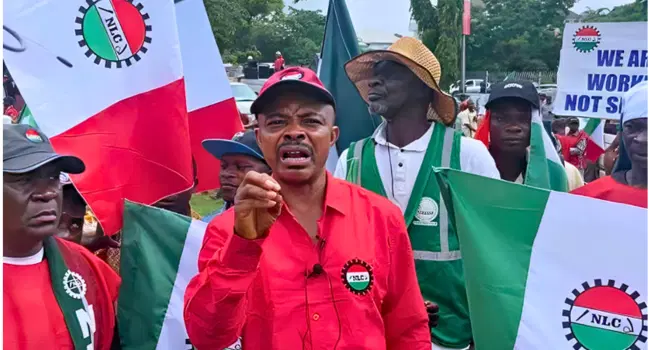
In a statement by its President, Joe Ajaero, the Nigeria Labour Congress said it was “deeply concerned over the confusion and contradictory narratives emerging from the Senate regarding the amendment to the 2022 Electoral Act,” especially on the issue of electronic transmission of results.
The statement cited by the NLC noted that public records show a proposed amendment to mandate the Independent National Electoral Commission to transmit results electronically in real-time was not adopted, with the existing discretionary provision retained.
The labour body said the ambiguity could “undermine public trust” in the electoral process and called on the Senate to provide an “official and unambiguous account of its proceedings and final decisions.”
The NLC also urged the National Assembly leadership to ensure that the harmonisation process results in clear language in the final bill.
Clear and unambiguous laws are central to public confidence in electoral processes. According to the NLC statement, uncertainty in the amended Electoral Act could affect how citizens and stakeholders perceive transparency and fairness in the lead-up to the 2027 elections.
The debate over electronic transmission of results and other proposed reforms has drawn broad attention. Civil society organisations and advocacy groups have highlighted the need for transparency and consistency in electoral laws as Nigeria prepares for national polls.
The legislative outcome may influence how the Independent National Electoral Commission conducts result collation and dissemination, a key procedural aspect of elections.