
Abia judiciary strike audit dispute has intensified as the Abia State Government directed judiciary workers to suspend their strike and submit to a staff verification exercise, insisting that concerns over leave allowances can only be resolved through proper audit and documentation.
The industrial action by judiciary workers in Abia State stems from a disagreement over leave allowances and welfare entitlements. The Judiciary Staff Union of Nigeria (JUSUN) had shut down courts across the state, disrupting judicial services.
The central dispute is whether leave allowances are paid separately or already included in the consolidated salary structure.
While the union insists payments are outstanding, the state government maintains they are already embedded in salaries.
The Abia judiciary strike audit issue has therefore become the main point of contention between both sides.
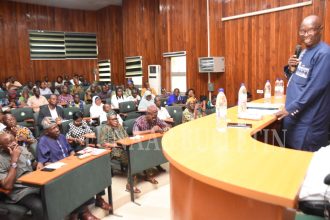
The Attorney General and Commissioner for Justice, Ikechukwu Uwanna, called on the workers to call off the strike and participate in the audit process during a briefing in Umuahia.
He stated that if it is proven that leave bonuses are not included in the consolidated salary, the government would make payment within 48 hours.
Uwanna said the government had repeatedly requested payroll records from the union but had not received the necessary documentation, even as the strike continued.
The Abia judiciary strike audit discussion also includes a wider staff verification exercise aimed at addressing irregularities and ensuring accurate payroll records.
Officials warned that refusal to participate in the audit could delay pension payments and allow possible discrepancies in the system.
The Accountant General of the state, Njum Onyemanam, clarified that the judiciary handles its internal payroll and is responsible for providing accurate documentation for verification purposes.
The Abia judiciary strike audit dispute continues to affect court operations across the state, limiting access to justice for residents and slowing judicial processes.
For workers, the issue highlights ongoing concerns about salary structure clarity and unpaid entitlements. For pensioners, delays in verification processes may further postpone benefit payments.
For the government, the dispute underscores the importance of payroll transparency and compliance with verification procedures in public service administration.