ADC demands INEC chairman sack as the party raised alarm over what it described as a calculated attempt to enforce a one-party state ahead of the 2027 general elections.
The African Democratic Congress accused the electoral body of actions that could weaken opposition parties and distort Nigeria’s democratic process.
Nigeria’s political environment is entering a critical phase as parties begin early positioning ahead of the 2027 general elections.
Opposition parties have increasingly raised concerns about institutional neutrality, especially regarding the role of the Independent National Electoral Commission in managing party affairs and electoral processes.
The ADC has been dealing with an internal leadership crisis since 2025, following the emergence of a new National Working Committee led by former Senate President David Mark.
The dispute stems from disagreements over the tenure of former chairman Ralph Nwosu, whose term ended in August 2022 but remained a source of contention within the party.
Multiple court cases and rival claims to leadership have since created uncertainty within the party, raising concerns about its readiness for upcoming elections and its ability to function as a unified opposition platform.
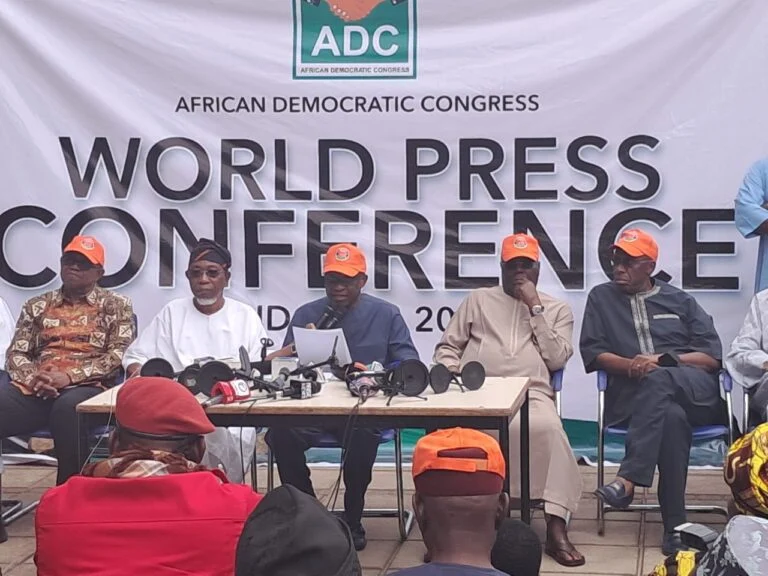
ADC National Chairman, David Mark, made the party’s position known while addressing journalists at the Yar’Adua Centre in Abuja.
He called for the immediate removal of the INEC Chairman, Professor Amupitan Joash, citing alleged bias and unlawful actions.
The demand followed a recent decision by INEC to delist key ADC officials, including Mark and National Secretary Rauf Aregbesola.
The electoral commission explained that its action was based on a court order directing it to maintain the status quo pending the resolution of ongoing litigation.
Reacting to the development, Mark alleged that there had been sustained attacks on democratic principles, particularly the freedom of association.
He said, “The agenda is very clear: to create a situation where, in 2027, President Bola Ahmed Tinubu emerges as the only option left for the people.”
He further linked the situation to broader governance challenges, including economic hardship and insecurity, which he argued could influence voter sentiment ahead of the elections.
ADC demands INEC chairman sack as part of what the party described as a broader effort to resist actions it believes could undermine opposition participation and electoral fairness.
The development carries significant implications for Nigeria’s democratic framework and political stability.
Allegations of institutional bias can weaken public trust in electoral processes and reduce confidence in upcoming elections.
For opposition parties, the situation highlights the importance of internal cohesion and legal clarity, especially as political alliances and realignments intensify ahead of 2027.
A fragmented opposition could struggle to present a unified challenge in national elections.
From a governance perspective, the controversy underscores the need for transparency and strict adherence to legal processes by electoral institutions.
Maintaining neutrality is critical to ensuring credibility and legitimacy in democratic systems.
For citizens and businesses, political uncertainty can influence economic confidence, investment decisions, and overall national stability, particularly in an election cycle that is expected to shape policy direction for years to come.