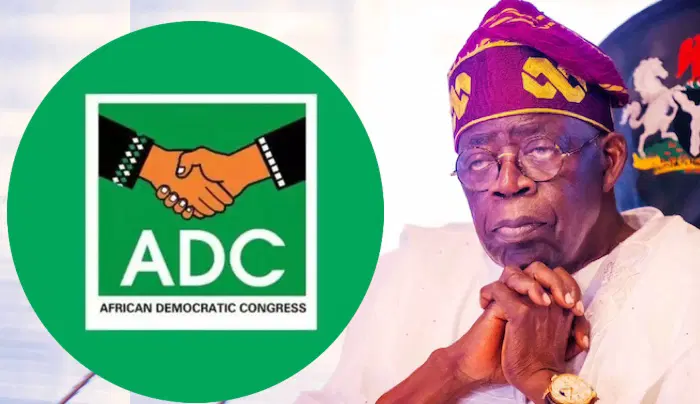
The African Democratic Congress (ADC) has declared that removing President Bola Ahmed Tinubu from office in 2027 is the only way to rescue Nigeria from what it calls an unprecedented governance crisis.
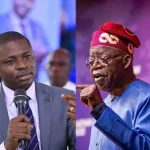
The party’s spokesperson, Bolaji Abdullahi, made the comments on Channels Television’s Politics Today, arguing that the current administration has “hijacked” the country and cannot deliver stability or good governance while remaining in power.
The ADC’s comments come amid growing political realignments ahead of the 2027 general election, where opposition forces — including former president candidates and high‑profile politicians — are seeking to challenge the ruling All Progressives Congress (APC) and its incumbent leader, President Tinubu.
The party has positioned itself as a vehicle for change, emphasising that political continuity under the current leadership would fail to reverse economic hardship, insecurity, and institutional concerns.
Abdullahi framed the Tinubu administration’s conduct as symptomatic of broader institutional decay, saying that governance under the president reflects a “bandit mentality” rather than democratic accountability.
He underscored that, in his view, Nigeria cannot be “taken back” while Tinubu remains in office, asserting that removing him is central to national recovery.
During the interview, Abdullahi criticised what he described as troubling trends in governance, including allegations of legislative manipulation and opaque executive actions. “A government that can forge a duly passed law; what do you call that?”
he asked, referencing alleged irregularities around recent tax legislation. The spokesperson also criticised a reported $9 million payment to foreign lobbyists to improve Nigeria’s global image — saying such spending reflects misplaced priorities and weak leadership.
Abdullahi further questioned a medical memorandum of understanding said to grant foreign entities influence over how certain funds are spent, describing the terms as “shocking” and a threat to national sovereignty, especially given that Nigerians had not seen details of the agreement.
The ADC’s stance highlights the intense political battle shaping Nigeria’s 2027 electoral landscape. By tying their agenda directly to the removal of an incumbent president, the party is staking its credibility on becoming the primary opposition force seeking systemic change.
This framing could energise segments of the electorate frustrated by economic hardship, insecurity, and governance concerns, particularly in urban and peri‑urban regions where these issues resonate deeply.
However, the position also raises questions about political strategy, legality, and democratic norms. Opponents argue that emphasising removal rather than policy alternatives may deepen polarisation and distract from substantive proposals for national reform.
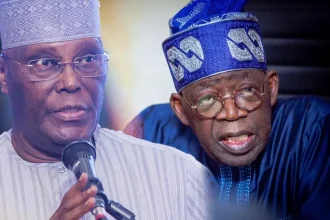
Analysts note that broad opposition coalitions — including figures like former Vice‑President Atiku Abubakar and Peter Obi — have also adopted the ADC platform to challenge Tinubu’s re‑election bid, underscoring a shifting political terrain.
The ADC’s declaration that ousting President Bola Tinubu in 2027 is essential to “rescue Nigeria” reflects heightened political tensions and a stark opposition narrative ahead of upcoming elections.
The party’s critique of governance practices, legislative integrity, and national priorities signals a determined effort to reshape Nigeria’s political discourse and appeal to citizens seeking change.
As 2027 approaches, the contest between continuity and reform will be central to national debate, with implications for democratic accountability and the balance of power in Nigeria’s federal system.