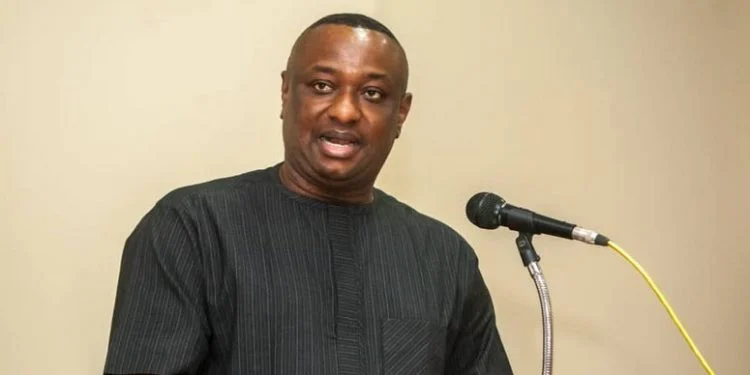
The Minister of Aviation and Aerospace Development, Festus Keyamo, has criticised some journalists and activists for allegedly presenting their personal opinions as the views of the Nigerian people in a post on X (formerly Twitter) on Thursday.
Mr Keyamo made the remarks amid discussions over public opinion in Nigeria as the country approaches the 2027 general elections.
His comments focused on how some media figures and activists report on public sentiment without clear evidence that such views represent a majority of Nigerians.
He questioned the methods used to determine what “the Nigerian people” think, including reliance on reactions from small groups of politicians, social media commenters or select media appearances.
In his post, the minister wrote that it was “amusing to see how some journalists and core opposition characters, posing as ‘activists’, continually express their own deep‑seated biases as the wishes of ‘the Nigerian people’”.
Mr Keyamo listed examples of groups he said are sometimes used to represent wider public sentiment, including individuals at the National Assembly entrance, a limited number of senators and members of the House of Representatives who voted against majority positions, and vocal social media commenters.
He also asked whether such conclusions were based on “the usual suspects who gather at the entrance of the National Assembly and pose for cameras” or “those vocal few who hop from one TV station to the next every day”.
The minister added a cautionary tone about public commentary, stating that as election season draws near, Nigerians should be alert because, in his view, some journalists and commentators are affiliated with interests rather than being neutral.
Mr Keyamo’s statement contributes to the ongoing national conversation about media reporting, activism and public opinion ahead of the 2027 elections.
His remarks may influence how public officials, journalists and activists assess and communicate views attributed to Nigerians.
For media stakeholders, the comments underscore scrutiny over how reporting and commentary are framed in political contexts.
For the broader public, they may raise questions about the interpretation of public sentiment in national discourse.