
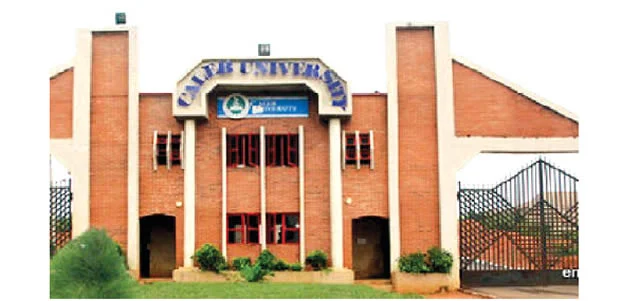
Caleb University, Imota, Lagos State, has graduated 1,924 students at its 15th Convocation Ceremony, including undergraduates, postgraduates, and doctoral candidates. Verified figures show honours distribution and honorary awards shared publicly by the institution.
The convocation marked a formal academic milestone for the university’s graduating class. The institution has a history of annual convocations where degrees are awarded to students completing academic requirements across various faculties.
At this ceremony, graduates ranged from undergraduate to doctoral levels.
Vice-Chancellor Prof Olalekan Asikhia addressed the gathering and spoke about the university’s direction, including strategies focused on academic quality, research, and student opportunities.
Total graduates: 1,924 comprising 1,625 undergraduates, 299 postgraduates, and 22 doctoral candidates.
Undergraduate degree classifications:
- 96 First-Class honours
- 719 Second Class Upper Division
- 719 Second Class Lower Division
- 82 Third Class degrees
Postgraduate outcomes: 46 distinctions, 143 merits, 88 pass grades recorded for postgraduate qualifiers.
The ceremony included the conferment of an honorary Doctor of Philosophy degree on Pastor (Mrs) Foluke Adeboye, wife of Pastor Enoch Adeboye of the Redeemed Christian Church of God.
The convocation lecturer was Rev Sam Aboyeji, General Overseer of the Foursquare Gospel Church in Nigeria.
Institutional leaders in attendance included the Registrar Mayokun Olumeru, Deputy Vice-Chancellors Prof Sunday Adewale and Prof Adesola Ajayi, Senate members, Deans, and Council members.
The graduation demonstrates Caleb University’s output of degree holders across academic levels during this ceremony. The distribution of degree classifications provides insight into academic performance patterns among the 2026 graduating class.
The presence of institutional leadership and notable speakers reflects the customary structure of university convocations.
For students, receiving degrees at convocation is a formal recognition of their completion of academic programmes. The awarding of an honorary doctorate illustrates the institution’s practice of recognising external contributions aligned with its values.