
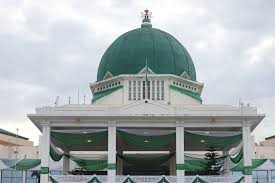
Capital budgets without cash have become a recurring concern in Nigeria’s public finance system, as trillions of naira approved by the National Assembly failed to reach Ministries, Departments and Agencies for project execution.
The gap between approvals and actual releases has continued to slow infrastructure delivery and weaken government spending outcomes.
Nigeria’s annual budget process is designed to drive development through capital expenditure on infrastructure, education, healthcare, and other critical sectors.
While the National Assembly regularly approves large capital allocations, actual cash backing for these budgets has remained inconsistent.
Over the years, analysts and fiscal watchdogs have pointed to a pattern where budgetary approvals do not translate into real funding.
This has created a cycle of abandoned projects, delayed execution, and reduced impact of government spending.
The issue of capital budgets without cash highlights structural challenges in revenue generation, debt servicing obligations, and cash flow management within the federal government’s fiscal operations.
Data reviewed from budget performance reports indicate that a significant portion of capital allocations approved by the National Assembly did not receive corresponding cash releases to MDAs.
This has resulted in low implementation rates across several ministries.
Findings show that while trillions of naira were appropriated for capital projects, actual disbursement levels fell far below expectations.
In many cases, MDAs received only a fraction of their approved budgets, making it difficult to execute planned projects within the fiscal year.
Officials explained that cash releases are often constrained by revenue shortfalls and competing obligations, particularly debt servicing, which takes a large share of government income.
This has reduced the amount available for capital expenditure.
The capital budgets without cash situation has also been linked to delays in the budget cycle, late approvals, and bottlenecks in the release process.
As a result, even when funds are eventually released, they often come late in the year, limiting effective utilisation.
Reports further show that some MDAs are forced to prioritise a few projects while abandoning others due to insufficient funding.
This selective implementation affects overall development outcomes and reduces the efficiency of public spending.
The persistence of capital budgets without cash has significant implications for Nigeria’s economic growth and development.
Infrastructure projects that are not completed on time increase costs and reduce the expected benefits to citizens and businesses.
For entrepreneurs and urban businesses, delayed infrastructure affects logistics, energy access, and operational efficiency. This can increase the cost of doing business and limit expansion opportunities.
For citizens, the gap between approved budgets and actual execution affects access to essential services such as roads, schools, and healthcare facilities. It also weakens public trust in government planning and delivery systems.
From a fiscal perspective, the issue underscores the need for improved revenue mobilisation, better expenditure prioritisation, and stronger accountability mechanisms in budget implementation.