
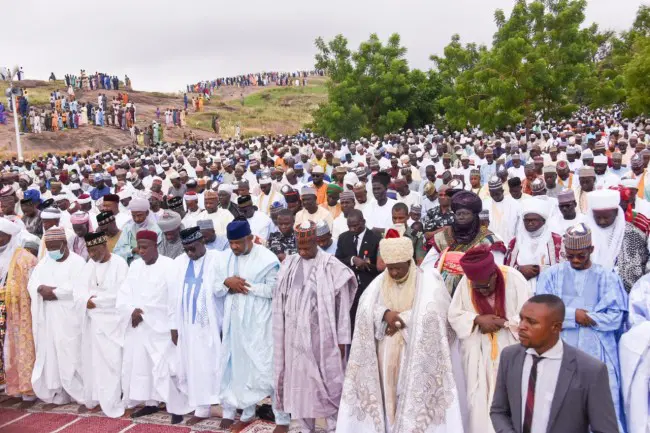
Eid‑ul‑Fitr celebrations began in Nigeria and across the Muslim world as faithful concluded the month of Ramadan with prayers, charity and expressions of gratitude to Allah, religious leaders and practitioners said.
Eid marks the end of the fasting period and the start of the Islamic month of Shawwal.
Eid‑ul‑Fitr is an important Islamic festival celebrated on the first day of Shawwal, the month that follows Ramadan in the Islamic lunar calendar.
The exact date is determined by the sighting of the new moon, which signals the end of the month of fasting.
The festival traditionally begins with a special congregational prayer offered in the morning, followed by gatherings with family and community members. It is widely observed by Muslims as a time for joy, reflection and social bonds.
Central to Eid‑ul‑Fitr is the practice of Zakat al‑Fitr, an obligatory charity given by financially able Muslims at the end of Ramadan.
This form of charity is intended to purify the fasting person and ensure that the less fortunate can also celebrate the festival with dignity.
Islamic sources explain that Zakat al‑Fitr involves giving staple food or its monetary equivalent before the Eid prayer so it reaches those in need in time for the celebration.
The act of giving charity at the conclusion of Ramadan combines spiritual purification with social welfare, embedding gratitude and compassion in the festival’s observance.
In some communities, the days leading up to the Eid prayer include acts of worship such as additional prayers, seeking forgiveness and communal gatherings that reinforce unity and shared purpose among worshippers.
Eid‑ul‑Fitr’s emphasis on charitable giving underscores the importance of social solidarity as Muslims celebrate the end of Ramadan.
The practice of Zakat al‑Fitr helps ensure that members of the community who are vulnerable can also join in the festivities, supporting broader social inclusion.
The festival also strengthens community bonds as families and neighbours share meals, exchange greetings and participate in communal prayers.