
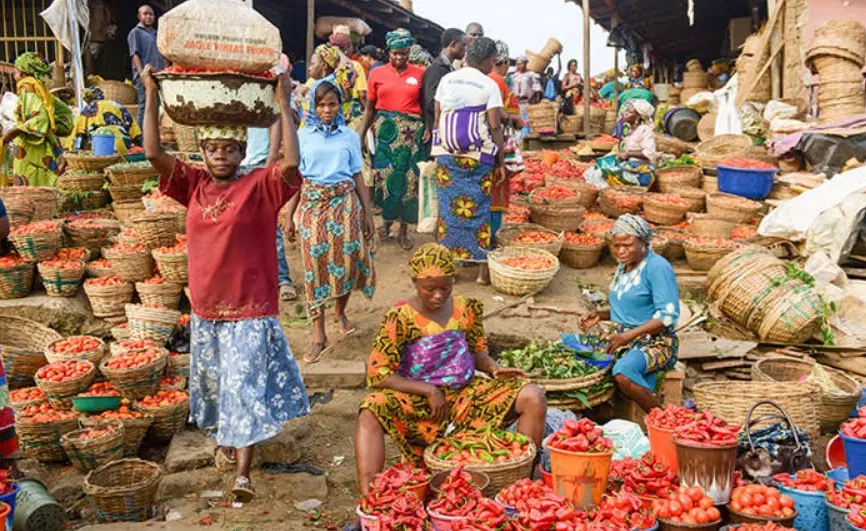
Fuel costs push food inflation higher, causing hardship for Lagos traders and shoppers as prices of basic food items continue to rise.
Traders blame increasing transportation and supply chain expenses linked to rising fuel prices, while consumers lament shrinking purchasing power amid stretched household budgets.
Nigeria has experienced persistent inflationary pressure in recent years, driven by multiple factors including foreign exchange volatility, production disruptions, and rising energy costs.
Fuel prices, which influence transportation and logistics, play a central role in the cost structure of food distribution networks.
In Lagos, West Africa’s busiest commercial hub, demand for food products remains high, but the cost of moving goods from production centres to urban markets has increased sharply.
Rising fuel costs affect truck operators, market logistics, and ultimately retail prices, contributing to food inflation that weighs heavily on consumers.
Traders in popular Lagos markets such as Mile 12, Oshodi, and Agege reported that the cost of transporting foodstuffs from northern production zones has risen significantly, largely due to increased fuel costs. This, they say, has forced them to raise prices to maintain operations.
A rice trader at Mile 12, who requested anonymity, said that transport fares for millers and distributors have climbed by over 30 per cent in recent months, directly affecting retail prices.
Similar reports emerged from vegetable and tuber traders, who noted that high logistics costs have eroded profit margins.
Shoppers at various markets in Lagos confirmed that prices of staples like rice, garri, beans, and tomatoes have increased compared with previous months.
Many consumers said their household budgets have been strained, forcing them to buy smaller quantities or shift to lower‑cost alternatives.
Economic data indicate that national food inflation remained elevated, with the food component of the Consumer Price Index continuing to outpace overall inflation.
Analysts have linked this trend to supply chain shocks, currency pressures, and the rising cost of fuel, which remains a critical input for moving food goods across regions.
Food distributors also reported fluctuations in prices of imported staples, as foreign exchange instability impacts the cost of imports and contributes to overall food price volatility.
The trend where fuel costs push food inflation higher has broad implications for households and businesses alike.
For low‑income families, escalating food prices reduce real income and strain budgets, leading to decreased nutrition and heightened vulnerability.
For traders and small business owners, rising input costs lower profitability and can lead to reduced market activity. Higher food prices also dampen consumer demand, affecting retail turnover in urban markets.
From a policy perspective, the situation highlights the need for integrated strategies that address energy costs, food supply chains, and inflation management.
Government interventions such as targeted subsidies, improved logistics infrastructure, and stabilising foreign exchange could help ease pressures.
Economists have also suggested enhancing local agricultural productivity and reducing post‑harvest losses to strengthen food supply and insulate markets from external cost shocks.