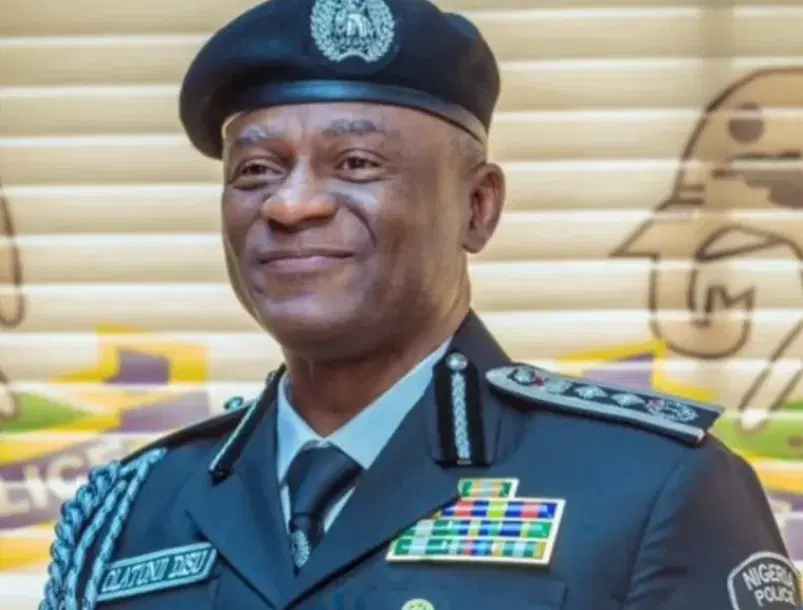
Inspector-General of Police, Tunji Disu, has inaugurated a high-level committee to develop a framework for the implementation of state policing in Nigeria, marking a new step in ongoing discussions on decentralising the country’s security architecture.
Calls for the establishment of state police have intensified in recent years as Nigeria faces evolving security challenges across different regions.
Advocates argue that decentralised policing could strengthen local security responses and improve coordination between communities and law enforcement agencies.
President Bola Tinubu has also urged the National Assembly to amend the 1999 Constitution to provide legal backing for state police as part of broader security reforms.
The debate has drawn support from various political and socio-cultural groups who believe decentralised policing may improve security operations at the state level.
Speaking during the inauguration of the committee, Disu described the assignment as both significant and timely given Nigeria’s current security environment. The panel has been given four weeks to submit its report.
The committee is chaired by Professor Olu Ogunsakin and includes several security professionals and police officers. Members listed include CP Emmanuel Ojukwu (retd), CP Bode Ojajuni, DCP Okebuchi Ogora, ACP Ikechukwu Okafor, and CSP Tolulope Ipinmisho, among others.
According to the Inspector-General, the panel will examine policing systems within Nigeria and other countries and propose an operational structure for establishing state police.
He said the committee will review community security needs, identify potential risks, and design coordination mechanisms that will allow state policing to function without undermining national security.
Disu also said the committee will consider critical issues such as recruitment processes, training standards, funding arrangements, oversight systems and accountability structures.
These areas, he said, are essential to maintaining professionalism and sustaining public confidence in law enforcement institutions.
Addressing concerns that state police could be misused by political actors, the IGP stated that such concerns would be examined as part of the committee’s work.
He added that experiences from other countries operating decentralised policing systems would guide the committee’s recommendations.
The creation of the committee represents an administrative step in Nigeria’s ongoing national conversation about restructuring policing responsibilities between federal and state authorities.
If implemented within a constitutional framework, state policing could introduce new structures for law enforcement coordination between federal agencies and state governments.
The panel’s findings are expected to contribute to policy discussions on improving Nigeria’s security architecture.
For policymakers, security agencies and lawmakers, the committee’s report may provide operational insights into how decentralised policing systems could function while maintaining national security oversight.