
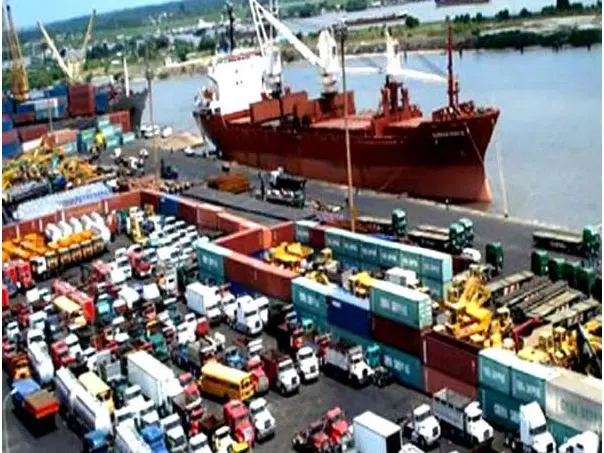
The Nigerian Ports Authority (NPA) on Wednesday said cargo throughput across the nation’s seaports rose by 24.8 per cent to 129.3 million metric tons in 2025, compared with the previous year, reflecting increased import and export activities.
Cargo throughput measures the total weight of goods handled by port facilities over a given period. Ports are critical infrastructure in Nigeria’s trade ecosystem, facilitating imports, exports and economic activity.
The NPA manages major seaports including Lagos Ports Complex (Apapa and Tin Can Island), Port Harcourt, Onne, Calabar, Warri and other terminals.
Increases in throughput often signal greater trade volumes and port utilisation.
In a statement signed by the NPA’s Acting General Manager, Corporate and Strategic Communication, Hassan Bello, the authority reported that total cargo throughput in 2025 reached 129,298,926 metric tons, compared with 103,583,297 metric tons in 2024. This represents a 24.8 per cent increase year-on-year.
The NPA said major seaports contributed to the growth, including the Lagos Port Complex (Apapa and Tin Can Island), Onne, Calabar, Port Harcourt and Warri.
The increase in volumes was attributed to higher imports and exports handled at these facilities.
Bello provided a breakdown showing that containerised cargo, liquid bulk, dry bulk, roll-on/roll-off (Ro-Ro) and general cargo all recorded higher figures compared with the prior year, but he did not specify exact figures per cargo type in the statement.
He said the increase in cargo throughput was recorded despite global freight rate volatility and port operational challenges that affect shipping lines and terminal operators. The statement did not provide details on specific challenges or freight rate data.
According to the authority, exports through the ports grew in tandem with imports, contributing to the overall rise in tonnage.
The NPA also said that ongoing infrastructure improvements at some ports supported increased cargo handling capacity during the period.
No numerical data on export versus import share was included in the release.
The reported 24.8 per cent rise in cargo throughput indicates stronger utilisation of Nigeria’s port infrastructure in 2025 compared with 2024.
Increased cargo movement can reflect higher trade activity, potentially supporting economic sectors involved in manufacturing, distribution and logistics.
For port operators, higher throughput may lead to increased revenue from handling fees, storage and related services. It also suggests demand for labour and equipment to manage larger cargo volumes.
For businesses engaged in import and export, growing throughput volumes may signal expanding trade flows, although operators still contend with freight costs and operational issues within ports and hinterland connections.
For government and policymakers, cargo growth figures provide a metric to assess the performance of maritime trade infrastructure and identify areas where further investment may be needed to sustain and improve efficiency in the logistics chain.