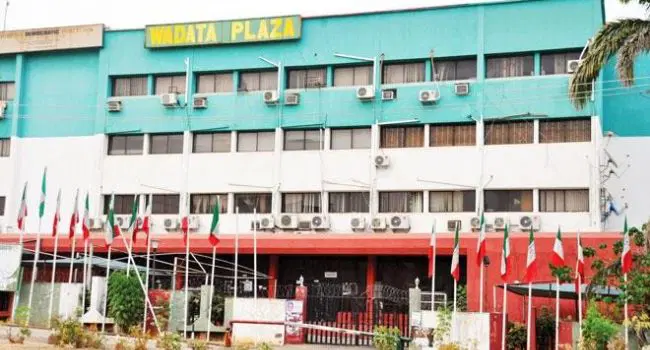
PDP secretariat reopening crisis has intensified after the Nigeria Police Force unsealed the party’s national headquarters in Abuja. The action restored access to Wadata Plaza and the Legacy House following months of closure linked to internal leadership disputes.
Competing factions immediately traded accusations over legitimacy and control. The development underscores ongoing tensions within the Peoples Democratic Party structure.
PDP secretariat reopening crisis stems from prolonged leadership disputes within the party. The national headquarters had been sealed in November 2025 following violent clashes between rival factions. These factions emerged from competing claims over party leadership and control of national structures.
The dispute escalated into legal battles that reached various courts in Nigeria. Judicial decisions influenced which faction could access the party secretariat at different stages. The involvement of security agencies became central to enforcing court directives.
The reopening reflects a wider pattern of political conflict within major opposition structures. Party institutions have repeatedly faced operational disruptions due to internal disagreements. These tensions have affected administrative coordination and political planning.
PDP secretariat reopening crisis deepened after the police unsealed the Abuja headquarters on Saturday. The action also included reopening the party’s Legacy House facility in Maitama.
The decision followed compliance with court-related directives guiding access to the property. The unsealing effectively restored physical control of the premises to a faction recognised under recent administrative arrangements.
One faction described the action as lawful and consistent with due process. It stated that security agencies acted in line with judicial guidance and constitutional order.
Another faction strongly rejected the development. It accused the police of partisanship and alleged interference in an ongoing legal process. The group claimed that appeals were still pending and that the matter remained unresolved in court.
The PDP secretariat reopening crisis also triggered competing press statements from both sides. Each faction maintained that it represents the legitimate leadership of the party at the national level.
Security presence remained visible around the headquarters following the reopening. Party officials were later seen accessing sections of the building under supervision.
PDP secretariat reopening crisis highlights the operational risks of prolonged internal party disputes. Administrative disruptions can weaken coordination ahead of elections and political negotiations.
For Nigeria’s opposition politics, the development signals continued fragmentation risks. Internal unity remains a key factor in maintaining electoral competitiveness.
For urban governance and political stakeholders, instability within major parties can affect policy debate consistency. It also influences public perception of institutional credibility.
For businesses and investors monitoring political stability, prolonged disputes may create uncertainty around policy direction. Political clarity is often essential for long-term economic planning.