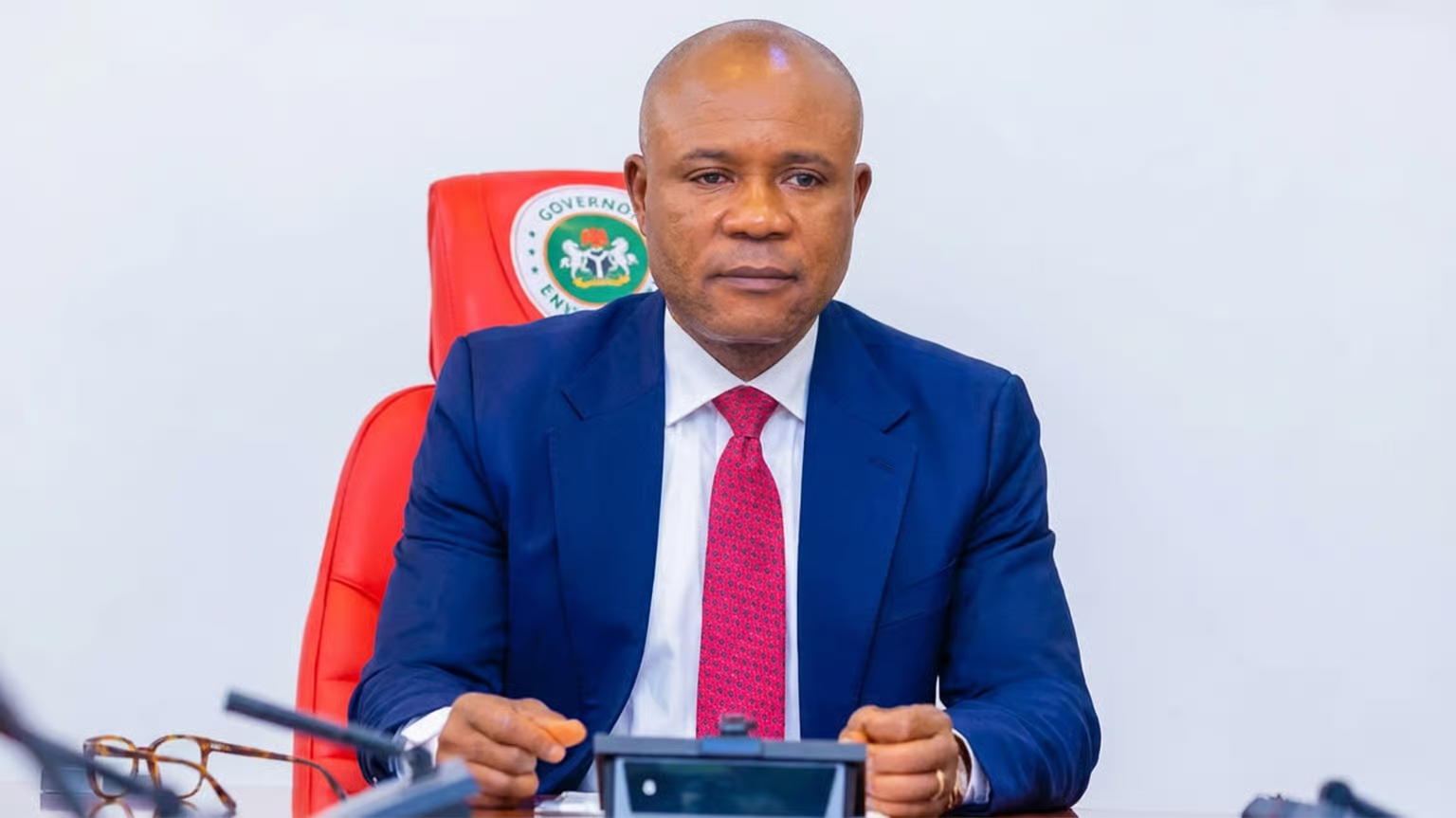
A sudden tax retreat by Peter Mbah is raising serious political questions in Enugu State, as the government abruptly suspends daily trader levies that had burdened petty traders for months.
The decision did not follow a newly discovered problem. Traders had complained repeatedly about multiple daily charges imposed on hawkers and small-scale sellers.
These levies reduced already thin daily profits and intensified economic pressure on low-income earners. Despite these complaints, the collections continued.
Now, the sudden suspension suggests a clear shift in approach. The timing is difficult to ignore. As political calculations begin to shape governance decisions, unpopular policies often give way to public-friendly gestures.
This raises a critical question. Why did it take this long?
If the levies were unfair, the government should have acted earlier. If they were not unfair, then the sudden suspension demands explanation. Either way, the delay points to political calculation rather than policy review.
Governments conduct periodic policy evaluations. Tax frameworks are not meant to operate unchecked. The failure to review the impact of daily trader levies until now reflects either policy oversight or deliberate tolerance of an unpopular system.
Both scenarios raise governance concerns.
The suspension also creates another risk. Without structural reform, the levies may return after the political season. This pattern has occurred repeatedly across Nigeria, where unpopular charges disappear temporarily and reappear under new names after elections.
Traders understand this risk. Many see the relief as temporary rather than permanent.
The government insists the suspension is part of broader tax restructuring. However, restructuring typically follows consultation, policy documentation, and implementation timelines. A sudden halt without detailed reform plans suggests a tactical move.
The core issue remains unchanged. Revenue generation must be balanced with economic realities. Petty traders operate on daily income. Multiple levies reduce liquidity, limit growth, and discourage participation in the informal economy.
The suspension acknowledges this reality. The delay in acting raises concerns about motive.
Citizens are therefore left with two conclusions. Either the government ignored trader hardship for months, or the government is adjusting policy in response to political timing.
Both possibilities demand scrutiny.
For now, traders welcome the relief. But the real test will come after elections. If the levies return, the suspension will be seen not as reform, but as strategy.