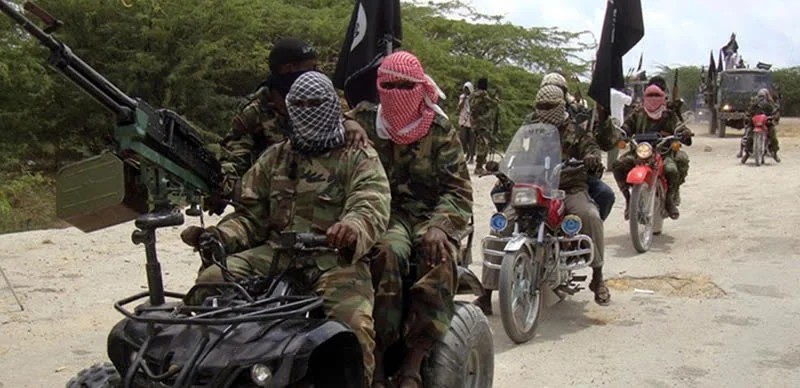
Investigative reporting by Saturday PUNCH has identified Abubakar Saidu, widely known as Sadiku, as the terrorist commander behind the deadly attack that occurred in Woro, a remote community in Kaiama Local Government Area, Kwara State, which resulted in the deaths of dozens of residents and widespread destruction, according to security sources and published findings.
Security reports trace Sadiku’s involvement in insurgency to 2014, when he was reportedly selected by the late Abubakar Shekau, then leader of Boko Haram, to expand the group’s influence beyond its traditional base in the North‑East.
Over the years, Sadiku is linked to militant operations across regions as he established networks in forest corridors spanning Niger and Kwara states, where he later built a base and allegedly planned attacks against rural communities.
Security findings indicate that Sadiku’s rise within Nigeria’s insurgency landscape spans more than a decade. Initially deployed by Boko Haram to extend reach into Niger State, Sadiku reportedly operated with allied groups to acquire weapons and fighters.
Over time, analysts describe him as a figure whose actions reflect a sustained militant strategy beyond mere banditry.
Investigators report that Sadiku’s operations evolved after ideological disagreements with former collaborators led him to pursue a more rigid campaign of violence.
By 2025, he had reportedly established a strategic base within the Kainji Forest Reserve, a vast area stretching across Niger and Kwara states that security sources now describe as a key militant hub outside traditional insurgent strongholds.
In reports shared by security analysts, Sadiku is described as increasingly resembling the late Shekau in operational influence in Nigeria’s North‑Central region, with the Woro massacre viewed as an extension of that violent campaign.
The attack on Woro occurred in early February 2026 when armed assailants stormed the community, firing weapons, burning buildings and killing numerous residents before withdrawing.
The assault drew national and international condemnation and prompted security responses, including the deployment of military forces to affected areas.
Government figures and humanitarian agencies have cited hundreds of deaths across Woro and neighbouring Nuku communities, and security sources linked the violence to armed extremist activity rather than isolated banditry.
Analysts say the identification of Sadiku as the commander behind the massacre reflects evolving insurgency dynamics, where militant actors extend their reach into new territory and exploit forested corridors to coordinate attacks, recruit fighters and sustain operations.
The Kainji Forest Reserve is noted for its strategic significance in this regard.
Security experts also note potential operational overlap between Sadiku’s faction and other extremist groups active in the broader Sahel region, though formal claims of responsibility for the attack have not been publicly confirmed by any group.