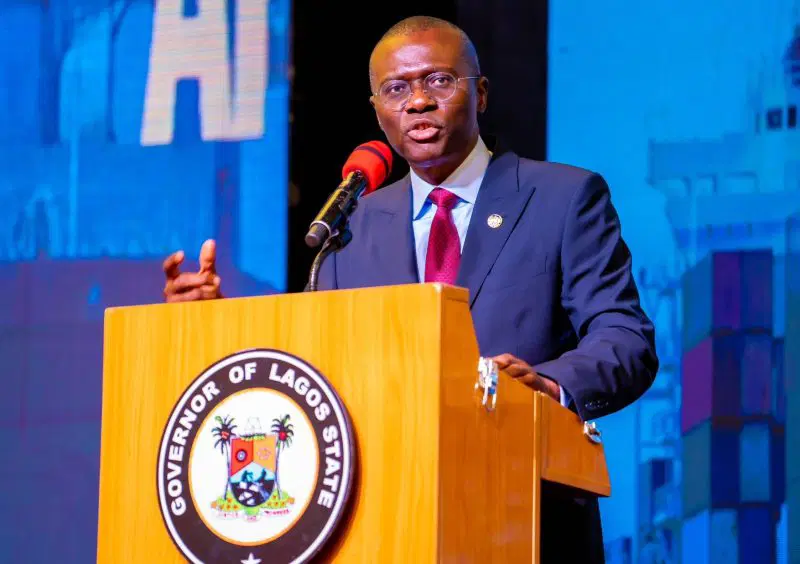
Lagos State Governor Babajide Sanwo-Olu has defended the ongoing demolition activity in Makoko, insisting that the government is not destroying the entire waterfront community but targeting unsafe and illegal structures that pose risks to residents and the wider city.
The governor’s remarks come amid mounting public concern over the impact of the demolitions, which activists and rights groups say have displaced thousands of residents.
Speaking on Monday, January 26, 2026, Sanwo-Olu reiterated that the exercise is focused on clearing shanties and structures built in high-risk zones. Especially under high-tension power lines and close to critical infrastructure such as the Third Mainland Bridge rather than razing Makoko in its entirety.
He said the state had previously issued evacuation notices more than two years ago to residents living within unsafe distances from the power cables.
“We are not demolishing the whole of Makoko,” the governor said, explaining that the demolition effort is guided by safety priorities for Lagosians.
He emphasised that the state government’s decision was made in the collective interest of Lagos and its residents, aimed at preventing potential disasters like electrocution or fires caused by illegal building practices. Sanwo-Olu said protecting lives and property remains paramount.
Officials from Lagos have also noted that the exercise followed extended engagement periods with communities in Makoko and other waterfront settlements over several years.
The government says it has communicated zoning and safety requirements tied to development regulations, including minimum setback distances from power lines to residents before the action began.
However, the demolitions have drawn intense criticism from activists, rights organisations and civic coalitions.
A coalition of national and international groups has condemned the evictions as systemic, illegal and cruel, accusing authorities of deploying force, destroying homes and displacing families without adequate resettlement plans.
They also claim that demolitions have extended beyond agreed safety boundaries and triggered humanitarian hardship.
Human rights advocates like former education minister Obiageli Ezekwesili have described the actions as class-based expulsion and land grabbing, urging an immediate halt to demolitions and calling for transparent legal justification, compensation, emergency shelter and long-term community-informed urban planning.
Civil society warnings align with reports indicating that thousands of homes have been torn down, displacing significant numbers of residents and disrupting livelihoods, access to healthcare and children’s schooling in the waterfront community.
NGOs have also highlighted the risk of a broader humanitarian crisis if homelessness and loss of essential services are not addressed promptly.
The Lagos State House of Assembly has publicly backed enforcement against illegal structures and supported government efforts to uphold planning and safety laws, particularly against buildings that contravene zoning and infrastructure safety standards.
Sanwo-Olu’s defence underscores the tension between urban safety imperatives and the protection of vulnerable communities in rapidly growing cities like Lagos.
Authorities maintain that enforcement is necessary where lives are at risk due to unregulated development, while critics continue to call for humane alternatives, adequate resettlement strategies and consultative land-use planning.