
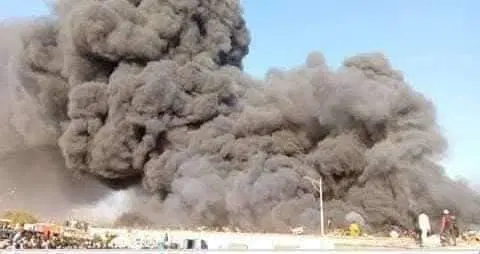
On Sunday, January 18, 2026, a major fire devastated a section of the Popular Sokoto Old Market, destroying more than 30 shops and inflicting deep financial loss on small‑scale traders in Sokoto State.
Market traders and business owners in the urban commercial hub are now facing an uncertain economic future and appealing for urgent support.
The fire erupted in the early hours of the day, rapidly consuming goods and structures before firefighters could fully contain the blaze. Traders said the flames engulfed Group Three Marketing Shop, a multi‑business complex, along with several adjoining stalls that stored essential food items and daily products.
Eyewitnesses said bags of rice, cartons of cooking oil, seasonings, and other essential commodities were destroyed, with estimated losses running into millions of naira.
Eyewitnesses described chaotic scenes as shop owners and helpers rushed to salvage what they could. “It was like watching years of hard work vanish in minutes,” said trader Malam Sani Zamau, reflecting the emotional and economic toll on affected families and business owners.
Sokoto State Fire Service battled the inferno for several hours before bringing it under control. Official reports confirmed no loss of life, but the financial and psychological impact on traders was evident as many sat amidst the charred remains of their businesses, unsure how to restart operations.
Traders, many of whom operate with thin profit margins, appealed to government authorities and private benefactors for immediate assistance. They called for financial support, affordable credit schemes, and investment in fire safety infrastructure to prevent future outbreaks.
Persistent power outages and electrical surges were cited by some traders as a likely trigger for the fire, pointing to broader infrastructure challenges facing urban commercial districts.
Market fires are not isolated to this incident. Previous outbreaks in Nigerian markets have shown how vulnerable informal business clusters remain to fire risks due to insufficient safety systems, cramped spaces, and inadequate emergency response capacity.
Stakeholders in urban markets have repeatedly urged state and local authorities to implement stricter safety audits, fire prevention training, and energy infrastructure improvements to protect market economies.
The Sokoto Old Market blaze comes at a time when the state government is engaged in reconstruction of the central Sokoto Market, which was extensively damaged by fire in 2021 in a project costing billions of naira.
The repetition of fire incidents in the city’s commercial zones highlights persistent gaps in preventive planning and resilience strategies for key economic spaces.
For urban traders and small business owners, this latest fire underscores the fragile nature of retail livelihoods in Nigeria’s cities. Practical interventions such as micro‑insurance products tailored for market enterprises, access to credit facilities for restocking, and community‑led fire safety committees can help build resilience.
Ensuring stable electricity supply and regular safety inspections must remain priorities for local governments aiming to safeguard urban commerce and protect informal sector contributors to Nigeria’s economy.