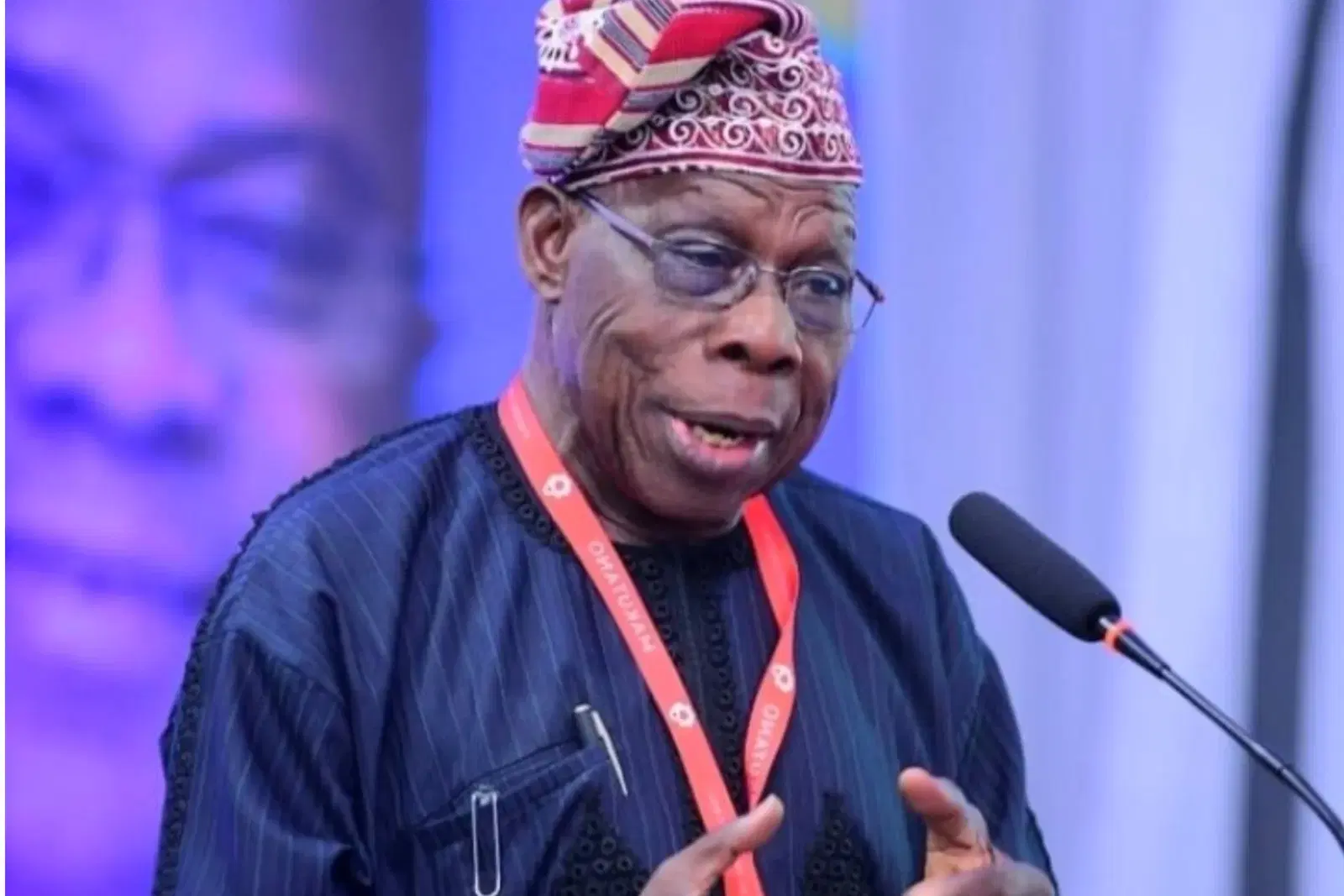
Former President Olusegun Obasanjo said his imprisonment in 1995 demonstrated the cost of taking a principled stand during military rule, remarks he made in a statement marking his 86th birthday.
Olusegun Obasanjo served as Nigeria’s Head of State from 1976 to 1979 and later as elected President from 1999 to 2007. In 1995, he was detained by the military regime of General Sani Abacha after publicly criticising that government.
Obasanjo was held at the Kirikiri Maximum Security Prison in Lagos before his release in 1998, shortly after Abacha’s death.
His experience remains a noted episode in Nigeria’s history of military and democratic transitions.
In the statement to mark his 86th birthday, Obasanjo said, “My imprisonment shows the price of a principled stand.” He said this reflected his belief that standing by convictions can carry personal costs.
He reaffirmed that his detention was connected to his public criticism of the military government at the time.
Obasanjo also expressed gratitude for surviving that period and for the opportunity to later serve as Nigeria’s democratically elected president.
The statement noted that his imprisonment occurred during a period when he voiced opposition to what he described as policies of the military regime.
The former president acknowledged support from individuals and groups who advocated for his release in the 1990s, saying their efforts contributed to his eventual freedom and return to public life.
He also thanked Nigerians who he said supported him and the cause of democratic governance.
Obasanjo’s reflection reiterates a historical moment in Nigeria’s struggle between military and civilian governance.
His remarks on the cost of principled stands may resonate with ongoing discussions about civic courage and political convictions in the country.
For observers of Nigerian political history, his comments contribute to the record of experiences under military rule, particularly episodes involving dissent and detention of prominent figures.
For the public, such reflections by a former head of state on challenges faced during military rule may inform understanding of Nigeria’s democratic evolution and the personal sacrifices of political actors during periods of authoritarian governance.