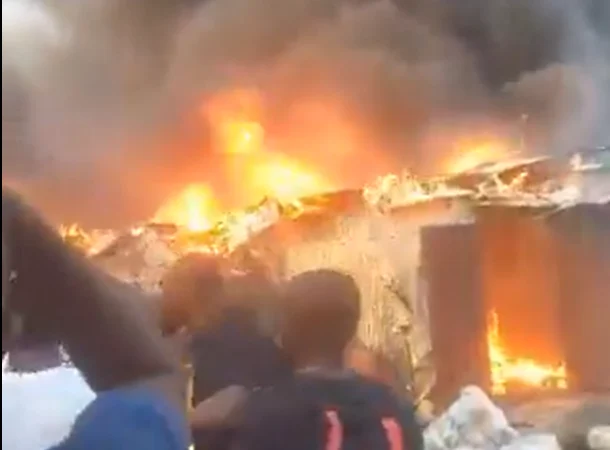
Lagos shops fire destroyed large quantities of textiles and goods after a blaze broke out in a busy market, leaving traders counting heavy losses.
The incident disrupted commercial activities and raised fresh concerns about fire safety in densely populated trading areas.
Market fires have become a recurring challenge in major commercial hubs across Nigeria, particularly in Lagos where trading clusters are densely packed.
Many of these markets operate with limited fire prevention infrastructure, increasing vulnerability to outbreaks.
Traders in textile markets often store highly flammable materials, which can accelerate the spread of fire once an incident begins.
Previous fire outbreaks in similar environments have resulted in significant economic losses and disrupted livelihoods.
The Lagos shops fire adds to growing concerns among business owners about safety measures, emergency preparedness, and the need for improved market regulation.
The fire reportedly broke out in the early hours, affecting several shops stocked with textiles and other goods. Witnesses said the blaze spread quickly due to the nature of the materials stored within the affected shops.
Traders present at the scene attempted to salvage goods but were overwhelmed by the intensity of the fire. Many were unable to recover their merchandise before it was consumed by the flames.
Emergency responders were alerted and arrived to contain the situation.
Fire service officials worked to prevent the blaze from spreading to nearby structures, eventually bringing it under control.
Although the exact cause of the Lagos shops fire has not been officially confirmed, traders and eyewitnesses suggested that electrical faults or unattended power sources could have contributed to the outbreak. Authorities have yet to release a formal investigation report.
No casualties were reported at the time of filing the incident, but the financial impact on traders was described as severe. Several shop owners lost goods valued at millions of naira.
The Lagos shops fire incident has once again highlighted the risks associated with inadequate fire prevention systems in commercial markets.
The Lagos shops fire has immediate economic consequences for affected traders, many of whom rely solely on daily sales for income.
Loss of goods translates directly to loss of capital, with limited access to insurance or financial recovery options.
For the broader business community, the incident underscores the importance of risk management, including fire insurance, proper storage practices, and compliance with safety standards.
At a systemic level, the event raises questions about enforcement of safety regulations in markets.
Improved infrastructure such as fire extinguishers, accessible water points, and emergency response plans could help reduce future losses.
Urban planners and policymakers may also need to prioritise safer market designs that reduce congestion and improve access for emergency services.