
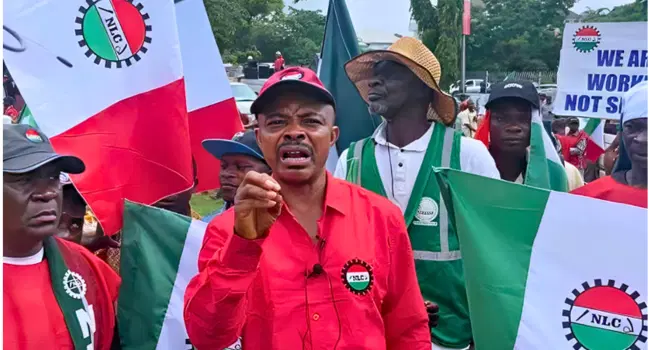
₦1m salary worthless has become a central concern as the Nigeria Labour Congress stated that even a monthly income of ₦1 million cannot sustain workers without a stable naira. The position was outlined by Joe Ajaero during an interview in Abuja. The ₦1m salary worthless argument reflects rising inflation and economic pressure on households. Labour leaders stressed that currency value matters more than nominal wage increases.
Nigeria’s wage discussions have intensified amid rising inflation and currency volatility. Workers across sectors continue to face increasing costs of living. The ₦1m salary worthless concern is tied to broader economic realities affecting purchasing power. Prices of food, transportation, and housing have risen significantly in recent months.
Minimum wage negotiations in Nigeria follow a structured legal process. These reviews are periodic and linked to economic conditions and government policy frameworks. Labour unions have consistently argued that wage adjustments alone cannot address economic hardship. They emphasise the need for macroeconomic stability and currency strength.
Speaking on the ₦1m salary worthless issue, Ajaero said rising inflation has continued to erode workers’ earnings. He noted that income levels are less important when the currency loses value. He stated, “Even if Nigerian workers earn ₦1 million, it will not be meaningful if the naira has no value.”
The NLC president explained that workers are struggling to afford basic needs. These include food, transportation, and housing. He added that discussions on a new minimum wage must follow legal procedures. According to him, the process cannot be rushed due to political timelines.
Ajaero also highlighted the impact of rising fuel prices on daily expenses. He said global developments have continued to influence local economic conditions. The labour leader called for urgent government intervention to stabilise the economy. He stressed the need for policies that protect workers from external economic shocks.
The ₦1m salary worthless stance has significant implications for wage policy and economic planning. It shifts focus from salary figures to real income value.
For businesses, rising wage expectations combined with inflation create operational challenges. Employers must balance labour costs with profitability. For urban households, declining purchasing power affects living standards. Many families face increasing difficulty meeting basic needs.
The situation also impacts consumer spending patterns across Nigeria’s urban economy. Reduced spending can slow growth in key sectors. For policymakers, the development highlights the importance of currency stability. Economic reforms may need to prioritise inflation control and exchange rate management.