
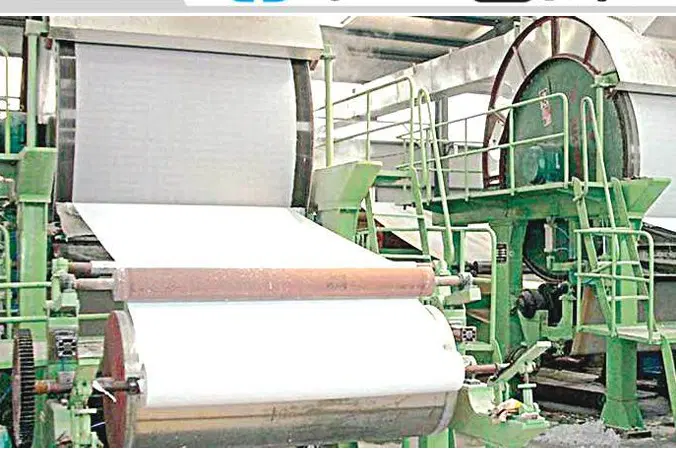
Nigeria Paper Mill collapse has continued to impact the economy, with the country losing about ₦674 billion annually to foreign producers. The losses stem from heavy dependence on imported paper products due to inactive local mills. The Nigeria Paper Mill collapse highlights long-standing structural issues within the manufacturing sector. Industry stakeholders warn that the trend weakens local production capacity.
Nigeria once operated major paper production facilities designed to support domestic demand. These included plants in Jebba, Oku-Iboku, and Ogun State. Historically, the Nigeria Paper Mill system reduced reliance on imports and supported industries like publishing and packaging. Over time, these facilities became inactive due to operational and policy challenges.
The Nigeria Paper Mill collapse reflects broader industrial decline linked to infrastructure gaps and inconsistent policies. These issues have limited the growth of local manufacturing capacity. Demand for paper products continues to rise across education, printing, and packaging sectors. This has increased dependence on imports.
Stakeholders estimate that Nigeria spends about ₦674 billion annually on imported paper products. This figure highlights the economic cost of the Nigeria Paper Mill collapse.
Industry experts stated that the shutdown of local mills has led to job losses and reduced industrial output. It has also disrupted value chains linked to paper production. The Raw Materials Research and Development Council has noted that reliance on imports increases pressure on foreign exchange reserves. This further weakens economic stability.
Stakeholders identified challenges such as lack of raw materials, especially long fibre pulp, as a major barrier. They also pointed to weak implementation of industrial policies. Calls have been made for government intervention to revive the Nigeria Paper Mill sector through investment and partnerships.
The Nigeria Paper Mill collapse affects businesses that rely on paper products for operations. Import dependence exposes companies to exchange rate fluctuations and higher costs. For small businesses in printing and packaging, rising input costs reduce profitability. This affects competitiveness in urban markets.
The education sector is also impacted, as higher paper costs influence the price of books and learning materials. This has implications for access to education. Reviving the Paper Mill industry could create jobs and strengthen local supply chains. It may also reduce pressure on foreign exchange.