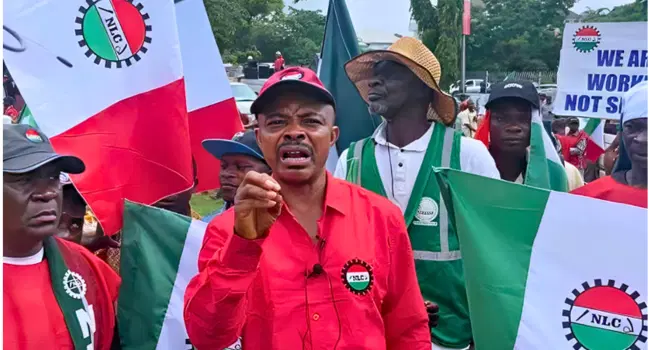
A fresh Nigeria hardship warning has been issued by the Nigeria Labour Congress as worsening insecurity, deepening poverty, and rising living costs continue to pressure workers and households nationwide. The labour union said economic survival has now replaced productivity for many Nigerians struggling with inflation and instability. The warning comes amid renewed debate over fuel subsidy removal and the government’s market-driven economic reforms.
The Nigeria hardship warning reflects growing concerns across multiple sectors of the economy. Labour unions and civil society groups have repeatedly linked worsening living conditions to inflation, insecurity, and the removal of fuel subsidy.
Since fuel subsidy removal in 2023, transportation and energy costs have increased sharply. Food inflation and housing expenses have also continued rising across major urban centres. Workers in both public and private sectors increasingly face pressure from stagnant wages and higher daily expenses. Insecurity has further complicated economic activity in many parts of the country. Labour leaders say violence, kidnappings, and displacement continue to affect productivity and livelihoods.
NLC President Joe Ajaero described the situation as critical for Nigerian workers and households. He said survival has become the primary concern for many citizens amid worsening economic conditions. According to Ajaero, insecurity has disrupted livelihoods and weakened economic activity nationwide. He stated that many workers can no longer function effectively under constant fear and uncertainty.
He also noted that displacement and instability have forced many Nigerians to abandon homes and businesses. The NLC warned that poverty and insecurity are undermining decent work and social protection systems.
The labour union criticised the government’s economic direction, especially continued support for fuel subsidy removal. The NLC has consistently argued that the manner of subsidy removal worsened hardship across the country.
Meanwhile, Minister of Finance and Coordinating Minister of the Economy, Taiwo Oyedele, maintained that the Federal Government would not restore fuel subsidy. Speaking with investors in France, he said the administration would also reject petrol price controls.
Oyedele stated, “We will not bring back fuel subsidy because it creates distortions for the economy.” He added that the government remains committed to market-based reforms. The Trade Union Congress also echoed concerns around declining living standards. Labour leaders warned that insecurity discourages investment and limits economic growth opportunities.
The Nigeria hardship warning highlights mounting pressure on urban households and businesses. Rising operational costs continue to affect transportation, manufacturing, and small enterprises. For workers, persistent inflation is reducing purchasing power and financial stability. Many households now prioritise essential survival spending over long-term savings or investment.
For businesses, insecurity and economic uncertainty may weaken expansion plans. Reduced consumer spending could also affect retail and service industries across major cities. For policymakers, the challenge remains balancing economic reforms with social protection measures. Labour unions continue to push for wage adjustments and targeted relief programs.