The Nigeria Employers’ Consultative Association has raised concerns over the NNPC refinery pact, questioning a fresh agreement between the Nigerian National Petroleum Company Limited and Chinese firms amid ongoing controversy over about $25bn spent on refinery rehabilitation. NECA warned that the new arrangement must not repeat past failures, stressing the need for transparency and accountability in Nigeria’s refinery management process. The association also demanded clarity on previous expenditures before further commitments are made.
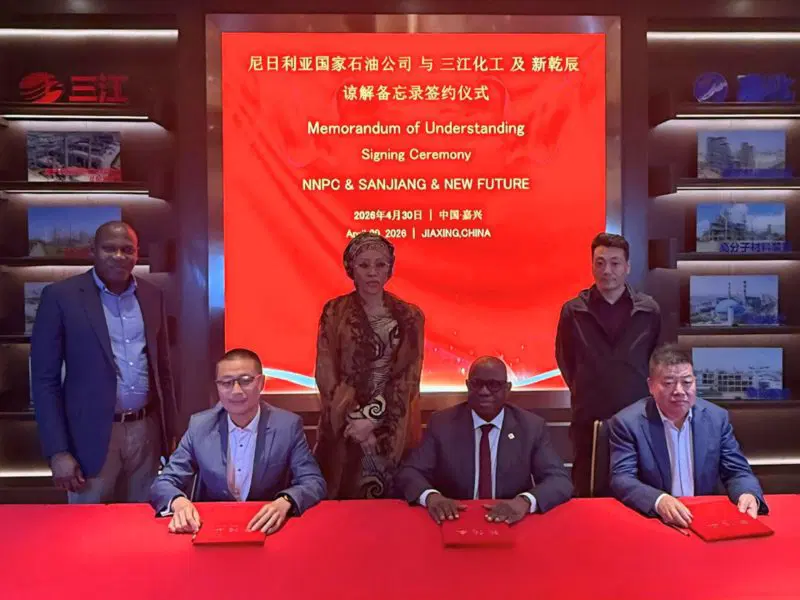
NECA’s reaction follows the recent signing of a Memorandum of Understanding between NNPC and Chinese firms for the restart, completion, and expansion of the Port Harcourt and Warri refineries. The agreement is part of ongoing efforts to restore Nigeria’s state-owned refining capacity.
The association noted that Nigeria has already spent an estimated $25bn on refinery rehabilitation and turnaround maintenance over the years without achieving sustainable refining output. It argued that this history raises concerns about repeating similar financial commitments without clear results.
The issue surrounding the NNPC refinery pact reflects long-standing debates about refinery performance, governance, and accountability in the downstream petroleum sector. NECA stressed that past spending patterns must be properly reviewed before new partnerships proceed.
NECA Director-General, Adewale-Smatt Oyerinde, stated that it would be inappropriate to support another refinery rehabilitation deal without full disclosure of how previous funds were used. He said Nigerians deserve clear explanations on past refinery investments and outcomes.
He noted that between 2010 and 2023, Nigeria reportedly spent about N11 trillion, equivalent to roughly $25bn, on refinery rehabilitation, maintenance, and turnaround programmes, yet the facilities remain largely non-functional. The concerns over the NNPC refinery pact also include the $1.5bn rehabilitation of the Port Harcourt refinery approved in 2021, which NECA said has not delivered sustainable refining output despite repeated assurances.
NECA called for full disclosure of the terms of the new MoU, including technical equity arrangements, procurement processes, and safeguards against delays or cost overruns. The association also questioned how local content participation, technology transfer, and long-term operational efficiency would be guaranteed under the new structure.
The NNPC refinery pact has therefore reignited broader concerns about transparency in public sector energy projects and repeated cycles of failed rehabilitation spending. NECA further emphasized that Nigerian businesses have borne the cost of energy insecurity through high production expenses, fuel import dependence, and job losses linked to inefficient refinery operations.
The refinery issue continues to have wide implications for Nigeria’s economy, especially the manufacturing and industrial sectors that rely heavily on stable energy supply.
NECA reiterated that governance reform in the downstream petroleum sector is more important than repeated rehabilitation projects. It argued that privatisation or concession models should be considered as alternatives to endless turnaround maintenance programmes. The controversy around the NNPC refinery pact highlights investor concerns about policy consistency, project execution risks, and long-term energy security planning in Nigeria.