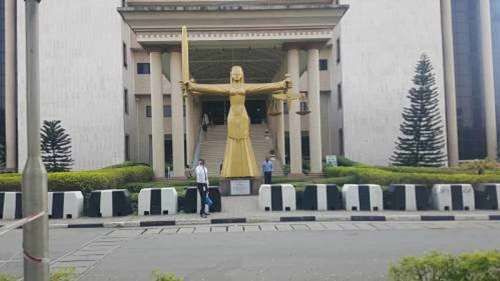
The Federal High Court in Abuja has nullified parts of the Independent National Electoral Commission timetable for the 2027 general elections, delivering a major ruling on the disputed INEC primaries deadline affecting political parties nationwide.
Justice Mohammed Umar ruled that the electoral body lacked powers to impose timelines that conflict with provisions of the Electoral Act 2026. The judgment specifically set aside INEC’s May 10 deadline requiring political parties to submit membership registers and databases before participating in the elections.
The court also faulted deadlines issued for party primaries, candidate nominations, withdrawals, and substitutions. According to the judgment, the timelines imposed by INEC were inconsistent with statutory provisions already outlined within the Electoral Act 2026.
The legal action was filed by the Youth Party, which argued that INEC exceeded its legal authority by shortening periods already protected under the law. The party maintained that Sections 29, 31, 82, and 84(1) of the Electoral Act clearly define the timelines political parties must follow before elections.
Justice Umar agreed with the argument presented before the court. He held that political parties are entitled to submit candidate particulars not later than 120 days before elections, as provided under Section 29(1) of the Electoral Act. The court further ruled that INEC could not lawfully reduce that timeframe through administrative scheduling.
The judgment also addressed candidate substitutions. The court stated that Section 31 of the Electoral Act permits parties to withdraw or replace candidates up to 90 days before elections. Consequently, the INEC primaries deadline restricting that period was declared invalid.
In addition, the court ruled that INEC could not publish final candidate lists earlier than the legally required 60-day minimum period established under Section 32 of the Electoral Act.
The ruling has generated reactions across Nigeria’s political landscape. The Coalition of United Political Parties called on INEC to immediately adjust its election timetable in line with the judgment. Former presidential candidate Gbenga Hashim also welcomed the decision, saying it confirmed concerns that the electoral commission exceeded its statutory authority.
For political parties and campaign organisations, the judgment may significantly alter preparations ahead of the 2027 elections. Many parties had already begun restructuring internal calendars to comply with earlier deadlines announced by INEC.
Legal analysts believe the ruling could influence internal party democracy and candidate selection processes. Urban political observers also note that the judgment may affect campaign financing, coalition negotiations, and youth participation strategies across major Nigerian cities.
The INEC primaries deadline case further highlights growing legal scrutiny surrounding Nigeria’s evolving electoral framework. With preparations for the 2027 elections already underway, political parties, civil society groups, and election stakeholders are expected to monitor how INEC responds to the judgment. As Nigeria approaches another election cycle, the decision reinforces the importance of clear legal interpretation, institutional accountability, and transparent electoral administration within the country’s democratic process.