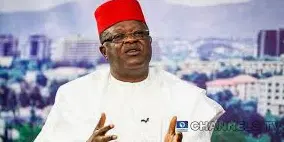
Nigeria’s political conversation around South-East federal projects intensified after Minister of Works David Umahi urged residents of the region to support President Bola Tinubu’s second-term ambition ahead of the 2027 general elections.
Umahi made the remarks during an inspection tour of ongoing federal road and bridge projects across Ebonyi State. The minister argued that the current administration had delivered infrastructure investments unmatched in the region’s recent political history.
Among the projects inspected was the Calabar-Ebonyi-Benue-Nasarawa-Abuja Superhighway, described by the minister as one of President Tinubu’s major legacy infrastructure programmes. Umahi said the corridor from Ndibe Beach in Ebonyi State to the Ebonyi-Benue boundary spans about 123 kilometres and carries an estimated project value of N454 billion.
According to him, the project includes reinforced concrete pavement and solar-powered streetlights. He also disclosed that the Federal Government had already released 50 percent funding for the project while additional approvals were being processed for critical sections.
The minister warned that political support remained important for sustaining ongoing South-East federal projects across the region. Speaking during the inspection, Umahi stated, “If they want this bridge completed, I will require 100 per cent of the votes. I am not asking for 99 per cent.”
Umahi further argued that no previous administration had committed comparable infrastructure resources to the South-East. He pointed to projects spanning Ebonyi, Enugu, Anambra, Abia, and neighbouring states as evidence of greater federal inclusion under the current administration.
The minister also highlighted the second phase of the superhighway project stretching from the Ebonyi-Benue boundary through Benue, Kogi, and Nasarawa states to Oweto Bridge. He said the section carried a contract value of N685 billion.
Umahi acknowledged existing funding pressures affecting contractors nationwide but maintained that the Federal Government remained committed to completing strategic infrastructure projects. He added that President Tinubu had assured contractors of payment obligations across various project sites nationwide.
The discussion surrounding South-East federal projects comes amid broader political preparations ahead of the 2027 elections. Political stakeholders across the region have increasingly debated issues involving infrastructure distribution, economic inclusion, and federal representation.
Analysts note that road and bridge projects remain critical to urban commerce and regional development within the South-East. Improved transport networks can reduce logistics costs, strengthen trade routes, and encourage investment opportunities for businesses operating across major commercial cities.
The infrastructure conversation also carries implications for young entrepreneurs, transport operators, manufacturers, and real estate investors who depend heavily on improved connectivity between states. Several ongoing federal road projects within the region link industrial hubs, agricultural corridors, and urban markets.
Umahi additionally urged political leaders within the South-East to publicly defend the administration’s achievements and sensitise residents on completed and ongoing projects. According to him, strategic political engagement remains necessary for sustaining development opportunities within the region.
The debate over South-East federal projects is expected to remain prominent as political campaigns gradually intensify ahead of the next election cycle. Infrastructure delivery, economic inclusion, and regional development may continue shaping voter conversations across Nigeria’s urban and commercial centres.