Fresh outrage has erupted across Nigeria following the latest reintegration of former insurgents in Borno State, with many citizens insisting that terrorists cannot genuinely repent and should face prosecution rather than rehabilitation.
The controversy centres on the Federal Government’s terrorist reintegration programme, widely known as Operation Safe Corridor, which was introduced in 2016 under former President Muhammadu Buhari as a non-kinetic approach to encourage defections from Boko Haram and other extremist groups. Under the programme, surrendered fighters undergo disarmament, deradicalisation, vocational training and psychological rehabilitation before being returned to their communities.
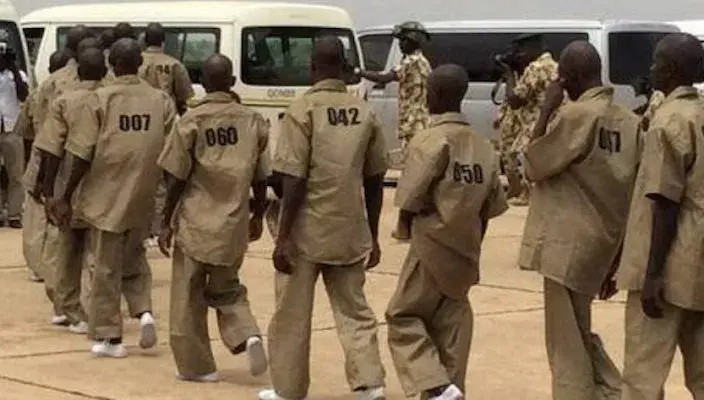
Public anger intensified after Borno State authorities reintegrated another batch of former insurgents on June 13, 2026. The group reportedly included 720 men, 992 spouses and 2,050 children who completed rehabilitation and took oaths before returning to communities across the state. Officials say nearly 10,000 former insurgents have now passed through the process.
For many Nigerians, the latest reintegration exercise reopened painful questions about justice, security and accountability. Critics argue that while thousands of victims remain displaced, widowed or traumatised by years of insurgency, former fighters are receiving government-funded rehabilitation and support.
On social media and in public discussions, many citizens questioned whether individuals involved in killings, kidnappings and attacks on communities should be allowed to return to society after completing rehabilitation programmes. Several commenters described the policy as a reward for violence, warning that some former insurgents could exploit the system to regroup or reconnect with extremist networks.
Former President of the Ijaw National Congress, Prof. Benjamin Okaba, acknowledged the emotional backlash but argued that Operation Safe Corridor is a strategic counter-terrorism tool rather than an amnesty programme.
According to him, encouraging defections can weaken terrorist organisations, reduce recruitment and save lives. However, he said implementation remains problematic, particularly in the areas of transparency, community acceptance and post-reintegration monitoring. Others were far more critical.
South South Reawakening Group Convener Joseph Ambakederimo argued that terrorists should be neutralised or prosecuted, insisting that Nigeria’s fight against terrorism requires a firmer and more consistent approach. Some analysts also questioned whether short rehabilitation programmes can truly erase years of indoctrination and participation in extremist activities.
Beyond the legal debate, many residents in conflict-affected areas fear that returning former fighters could create fresh security risks.
Community leaders have repeatedly called for stronger screening mechanisms, independent monitoring and greater involvement of local populations in reintegration decisions. They argue that communities that suffered attacks should have a voice in determining whether former insurgents are ready to return.
The renewed criticism places Nigeria’s terrorist reintegration programme under increasing scrutiny as authorities continue balancing military operations with efforts to encourage defections.
Supporters say rehabilitation can help end insurgency by persuading fighters to surrender. Opponents insist that without visible justice for victims, the policy risks undermining public confidence and creating the perception that violent actors receive more attention than those who suffered from terrorism.
As the debate deepens, one question continues to dominate public discussion: Can genuine repentance be distinguished from strategic surrender? For many Nigerians, the answer will determine whether the terrorist reintegration programme is seen as a pathway to peace or a dangerous gamble with national security.