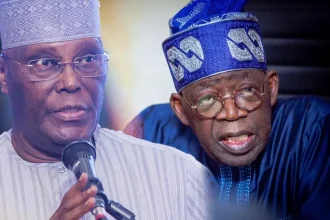

The recent Enugu North Senatorial District by-election has left behind more than just winners and losers. It has also left behind a trail of public concern, fueled by widely circulated reports and eyewitness accounts alleging voter intimidation, violence, disruption of polling activities and other electoral irregularities.
Across social media and political circles, the accounts were difficult to ignore. Videos and testimonies shared in real time painted a picture that many citizens found troubling, regardless of political affiliation. While electoral bodies and security agencies are expected to carry out their own assessments, the public perception that emerged from the exercise remains a serious issue in itself.
And so the question naturally arises:
Should the people of Enugu regard these incidents as isolated occurrences, or as a preview of what lies ahead in future elections? If reports of intimidation, violence and electoral irregularities could dominate a senatorial by-election, what assurances exist that the 2027 governorship and general elections will be different? These are not partisan questions. They are questions of public trust.
No democratic system survives on elections alone. It survives on confidence that citizens can participate freely, safely and without fear that their choices will be undermined. Once that confidence is shaken, the legitimacy of the process begins to weaken, even before official results are declared.
The concerns emerging from this by-election therefore deserve more than routine political responses. They require clear reflection from those responsible for maintaining order and ensuring credible elections in the state.
At the heart of the matter is accountability. Citizens are not only asking what happened, but also what will be done about what happened. Were the reported incidents investigated? Were there breaches of electoral conduct? Were security deployments adequate? And what corrective steps are being taken ahead of future elections?
These questions matter because 2027 is not a distant political abstraction. It is already on the horizon. The governorship election and the wider general elections will carry higher stakes, greater pressure and stronger political competition than a by-election. If a relatively limited contest can generate this level of concern, then it is reasonable for citizens to worry about what a full-scale election cycle might produce if the underlying issues are not addressed.
History offers a simple warning: electoral problems rarely escalate suddenly. They grow when early warning signs are ignored. They deepen when there are no consequences. They become entrenched when citizens begin to believe that nothing will change. The danger is not limited to any single election outcome. The deeper risk is normalization, where unacceptable practices slowly become accepted as part of the political process.
When fear enters the polling environment, participation declines. When trust erodes, disengagement increases. When citizens no longer believe their votes matter, democracy becomes procedural rather than meaningful.
This is why the conversation around the Enugu North by-election cannot be reduced to political arguments or post-election blame trading. It is fundamentally about the health of the electoral process itself. The responsibility now lies with state institutions to provide clarity and reassurance. That includes reviewing credible allegations, strengthening coordination with electoral and security bodies, and making clear what steps will be taken to prevent a repeat of such concerns.
Public confidence is not rebuilt through silence. It is rebuilt through transparency and action. The by-election may have concluded, but the issues it raised remain open. And until they are addressed, many citizens will continue to ask one difficult but necessary question: If this was the rehearsal, what exactly should Enugu expect when the main elections arrive in 2027?