The Federal Government has clarified that the widely cited $50bn investment announcements attracted to Nigeria represent commitments announced by investors, rather than funds already fully invested in the economy.
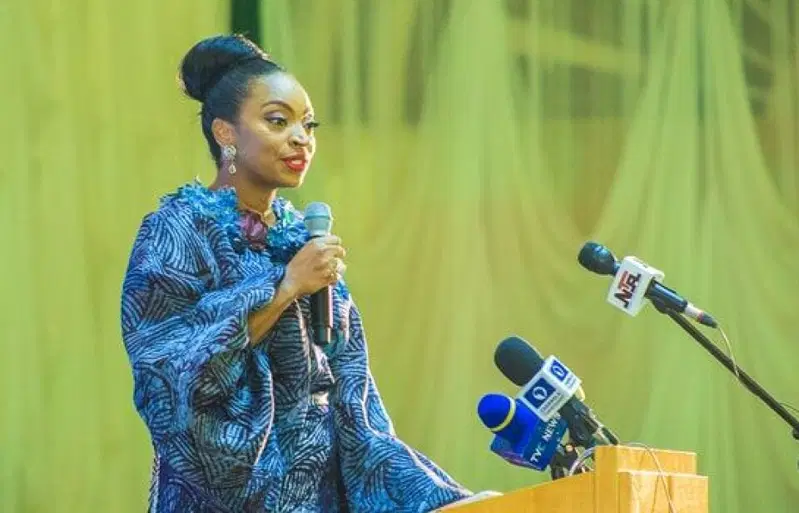
The Minister of Industry, Trade and Investment, Dr Jumoke Oduwole, made the clarification during an interview on Arise Television.
Asked what proportion of the $50 billion had actually been invested and which sectors had benefited, Oduwole did not provide a percentage but explained that the government distinguishes between investment announcements and projects already being implemented.
“As of January 2025, Mr President’s international visits and investment promotion had yielded about $50 billion in investment announcements.
“Our job is to make sure that those announcements are translated into real-time investments,” she said.
According to Oduwole, the announced commitments originated from more than 80 memoranda of understanding signed by government ministries, departments and agencies with international partners.
She explained that projects involving factories and other long-term investments could require considerable time before becoming operational.
“Slower, patient capital takes time, and it’s our job to continue working with businesses, both at the federal and sub-national level, to bring in those investments,” the minister said.
Oduwole cited the example of a healthcare manufacturer she met in 2025 as evidence that some investment commitments were progressing.
The company subsequently commenced operations at the Lagos Free Zone, where it planned to manufacture insecticide-treated nets for Nigeria and other African markets.
“That investment, that meeting, has borne fruit,” she said.
The minister also highlighted measures taken by the government to support manufacturers and improve the business environment.
“We have worked on trade facilitation, we have worked on taking them on trade missions, and we have worked on educating them on what they need to do to export,” she said.
She acknowledged that infrastructure, electricity and access to credit remained significant considerations for industrial development.
On the role of the Bank of Industry, Oduwole said the institution “has continued to push on its mandate.”
Oduwole also discussed Nigeria’s ongoing discussions with the United States concerning critical minerals.
She said the Federal Government was seeking investment that would support local processing and manufacturing rather than simply exporting raw mineral resources.
“We are looking for infrastructure; we are looking for energy and power. We are looking for pathways to make sure that we are not exporting raw minerals,” she said.
The minister described the minerals framework as being at an early stage, noting that memoranda of understanding do not necessarily create legally binding obligations.
“MOUs are not legally binding. This is how countries negotiate,” she explained.
According to Oduwole, Nigeria would seek investors capable of developing more of the mineral value chain domestically, including battery manufacturing.
“It’s time that we formalise that sector. It’s time that we have factories here that can deliver jobs,” she said.
The government’s task, she added, is to convert the $50bn investment announcements into operational businesses, industrial capacity and employment opportunities.