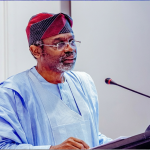

The legal team representing former Minister of Innovation, Science and Technology, Chief Uche Geoffrey Nnaji, has called on the public to allow the courts to determine issues arising from the ongoing controversy surrounding his academic records, insisting that public commentary should not replace judicial process.
In a statement issued on Tuesday, the team maintained that the issues currently attracting public attention remain subject to pending court proceedings and should therefore be resolved strictly on the basis of evidence presented before the judiciary.
According to the statement, Chief Nnaji was the party who initiated the principal suit before the Federal High Court in Abuja, seeking judicial clarification on matters relating to his academic records and the release of his official university transcript.
The lawyers stressed that filing a civil action to protect one’s legal rights should not be misconstrued as a criminal prosecution or an admission of wrongdoing.
They further noted that recent reports suggesting otherwise have created widespread public misunderstanding of the actual legal position.
The legal team also addressed reports concerning investigations by the Independent Corrupt Practices and Other Related Offences Commission (ICPC), stating that all issues raised by the Commission are being approached through lawful channels and that Chief Nnaji remains willing to cooperate within the framework of the law.
They emphasized that legal processes must be respected by all parties and cautioned against attempts to influence public opinion through sensational reporting while judicial proceedings remain ongoing.
“Courts exist to examine evidence, interpret the law and reach impartial decisions. Public opinion, however strongly expressed, cannot substitute for due process,” the statement said.
The lawyers added that confidence in Nigeria’s justice system requires patience and restraint from all stakeholders until the courts have concluded the matters before them.
They reiterated that Chief Nnaji remains committed to transparency, accountability and respect for constitutional institutions, expressing confidence that the judicial process will ultimately establish the facts.
The statement concluded by urging members of the public to disregard speculation, avoid premature conclusions and await the outcome of the pending proceedings before the appropriate courts.