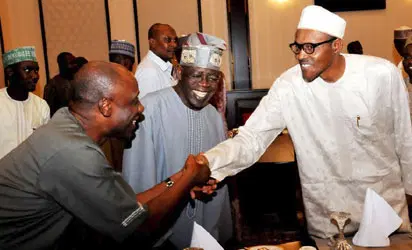
The Buhari presidency election debate has resurfaced following comments attributed to President Bola Tinubu, prompting a response from former Minister of Transportation, Rotimi Amaechi. Amaechi maintained that he played a significant role in Muhammadu Buhari’s emergence as president in 2015, countering suggestions that downplay his contribution to the election outcome.
The exchange highlights renewed political tensions within Nigeria’s ruling elite. Both Amaechi and Tinubu were key figures in the formation and rise of the All Progressives Congress (APC). Their political collaboration was central to the 2015 general election, which ended the long-standing dominance of the Peoples Democratic Party (PDP). The Buhari presidency election remains a reference point in their shared political history.
Amaechi served as Director-General of Buhari’s 2015 presidential campaign. The campaign brought together several opposition parties under the APC coalition. It also marked a major shift in Nigeria’s political structure at the federal level.
Amaechi stated that his role in the campaign was decisive in Buhari’s victory. He made the remarks while responding to comments linked to President Tinubu. The Buhari presidency election was referenced repeatedly in his defence of his political involvement.
He explained that he was responsible for coordinating campaign structures across key regions. He also noted that opposition forces were mobilised through collaborative party efforts. Amaechi maintained that these contributions were central to the election outcome.
He further insisted that attempts to minimise his role were not consistent with historical facts. The remarks have since generated reactions within political circles. The Buhari presidency election continues to be cited in discussions about party leadership influence.
The disagreement reflects ongoing rivalry within Nigeria’s ruling political establishment. Amaechi and Tinubu both hold long-standing influence within the APC. Their roles in the 2015 election continue to shape political narratives within the party.
Political analysts say such disputes often resurface during periods of political realignment. They also note that historical election roles are frequently revisited in internal party debates. Buhari presidency election remains a key reference point in these discussions.
The exchange may influence internal party relations ahead of future political contests. It highlights continued competition over political influence and historical recognition. Party stakeholders often reference past election contributions in leadership negotiations. The former president election narrative may continue shaping perceptions within the APC. It also reflects broader tensions over political legacy and authority within Nigeria’s political system.