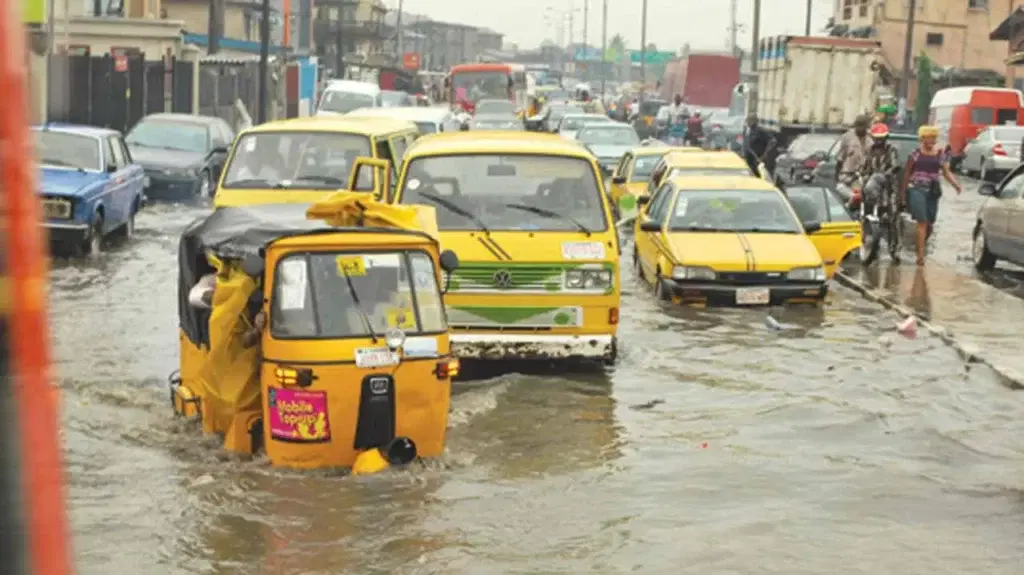
Lagos flash floods brought transportation and commercial activities to a halt across the state after hours of torrential rainfall submerged major roads, stranded motorists and commuters, and triggered widespread traffic gridlock in several parts of the metropolis.
The downpour, which started around noon and continued until about 4 p.m., flooded highways and inner roads, leaving numerous vehicles trapped in rising water while others broke down, worsening traffic congestion across the city.
Checks showed that several major routes, including the Lagos-Ibadan Expressway, Ikorodu Road, Lagos-Abeokuta Expressway, Apapa-Oshodi Expressway, Oshodi, Agege, Ikeja, Alimosho, Obalende and the Lekki-Epe Expressway, were heavily affected.
Many motorists abandoned their vehicles temporarily, while commercial bus operators struggled to navigate the flooded roads. In several locations, commuters were forced to walk long distances after transport services were suspended because of the rising floodwaters. The disruption followed an earlier advisory by the Nigerian Meteorological Agency (NiMet), which forecast widespread rainfall and warned of possible flash flooding in vulnerable parts of the country.
Several residents and motorists blamed the recurring Lagos flash floods on blocked drainage channels, indiscriminate refuse disposal and poor maintenance of drainage infrastructure. A motorist, Johnson Alaba, who was trapped along the Apapa-Oshodi Expressway, expressed frustration over the situation.
“The blocked drainage channels worsened the flooding situation. The entire road is submerged, no movement. The drainage channel is not functional here,” he said. Another motorist, identified simply as Tony, described his experience while driving through the flooded expressway.
“I practically swam through the flood from Isolo to Mile 2 along the Apapa-Oshodi Expressway with my car. The problem was compounded by heaps of refuse dumped along the expressway. The state government should live up to its responsibility and deal with the issue of refuse dumps along the roads. If care is not taken, the state may witness a serious epidemic,” he said.
Residents in affected communities also appealed to the government to intensify drainage maintenance and enforce environmental sanitation regulations to reduce recurring flooding.
Reacting to the development, Lagos State Commissioner for the Environment and Water Resources, Tokunbo Wahab, urged residents not to panic, explaining that the flooding experienced across many parts of the state was temporary and expected to recede within a few hours. According to him, flash flooding is common in coastal cities during periods of intense rainfall and should not be mistaken for prolonged flooding.
“Let me assure you that our State will continue to reap the benefits of careful and rigorous planning, as our flood control measures are being stepped up to contain any imminent rainfall,” he said.
The commissioner said the government had maintained an all-year-round drainage maintenance programme alongside a sustainable solid waste management system to improve flood control.
Wahab explained that rising lagoon water levels during high tide often prevent stormwater from flowing into the lagoon, resulting in temporary flooding and backflow.
“We all need to be wary of another contributory factor to flooding, which is the rise in lagoon level. Anytime there is high tidal movement, it may lock up the discharge points of drainage channels and until it recedes, there will be no discharge,” he said.
He urged residents to avoid indiscriminate refuse disposal, illegal land reclamation, blockage of drainage channels and construction on drainage setbacks, noting that these activities contribute significantly to Lagos flash floods. The commissioner added that sustained investment in resilient drainage infrastructure and strict environmental enforcement had helped reduce the severity of flooding across Lagos despite increasing rainfall in recent years.