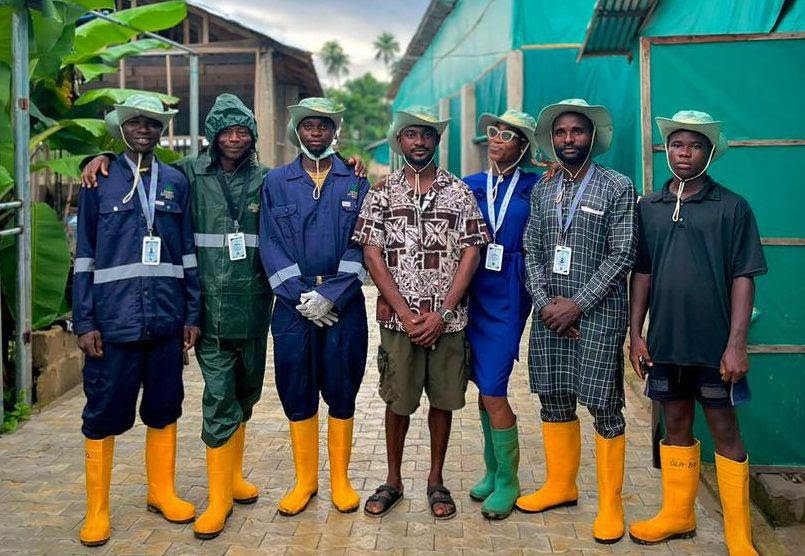
Green Livestock Africa Limited is expanding its livestock farmer training programmes to help aspiring and existing farmers improve their agricultural knowledge and farm management skills.
The Rivers State-based organisation, founded by Eromosele Edward Ozah, has made farmer education a central part of its community-development activities.
Through its programmes, the organisation provides free training and agricultural resources covering livestock breeding, nutrition, disease prevention and farm management.
“Access to practical knowledge helps farmers make better decisions, reduce avoidable losses and improve the productivity of their farms,” the organisation stated.
Green Livestock Africa said its online educational resources are available to farmers without enrolment fees.
Its first documented training cohort comprised 93 farmers. According to its impact records, participants received training in breeding, nutrition, disease prevention and farm management.
The organisation also shares farming information through its digital platforms. The materials are intended to provide practical guidance for everyday livestock management.
Its approach to livestock farmer training extends beyond classroom education. The organisation links farmer education with agricultural resources, veterinary support, livestock genetics and animal health management.
One of its tools is the Herd Health Card. The system provides vaccination and health schedules based on the species and age of livestock.
It covers goats, sheep, cattle and poultry.
Green Livestock Africa also provides information on improved livestock genetics and artificial insemination.
Its goat breeding programme uses genetics from Kalahari, Boer and Sahel goats. Breeding information is also recorded as part of individual animal records.
The organisation said its community initiatives are also designed to encourage greater participation in agriculture.
It has identified young people as important to the future of the agricultural sector. To this end, it is developing plans for a Future Farmers Academy.
The proposed programme will introduce children and teenagers to livestock farming, record-keeping and agricultural entrepreneurship.
It is intended for young people between eight and 18 years.
“The objective is to help young people develop an early understanding of agriculture and potentially view farming as both a profession and an entrepreneurial opportunity,” the organisation said.
The initiative forms part of Ozah’s broader ambition to increase agricultural knowledge across Africa.
In an interview published by Vanguard, Ozah said he had trained close to 500 new livestock farmers in Nigeria.
He also set a long-term target of training one million farmers across Africa before the age of 40.
“We want to build a generation of farmers who not only rear animals but understand how to manage them profitably and sustainably,” Ozah said.
Green Livestock Africa said its activities are built around three connected areas: educating farmers, providing appropriate agricultural resources and supporting livestock businesses as they develop.
“This model links knowledge with practical resources and measurable agricultural outcomes,” the organisation explained.
It is also seeking partnerships with sponsors and development organisations supporting farmer education and food-security initiatives.
Under the partnership programme, sponsors can support training cohorts, agricultural inputs and veterinary assistance. Green Livestock Africa said it provides reports on programme outcomes.
As Nigeria seeks higher agricultural productivity and increased youth participation in farming, the organisation said practical education remains important.
For Green Livestock Africa, its community-development activities are intended to complement livestock production by ensuring farmers have access to both farming resources and the knowledge needed to use them effectively.
“Our longer-term vision is to expand our training programmes, reach more farmers across Africa and encourage a new generation of agricultural entrepreneurs,” the organisation stated.
This version keeps the story news-focused and neutral, while making the training initiative, youth programme and wider farmer-development model the central narrative.